How to care for an Alocasia
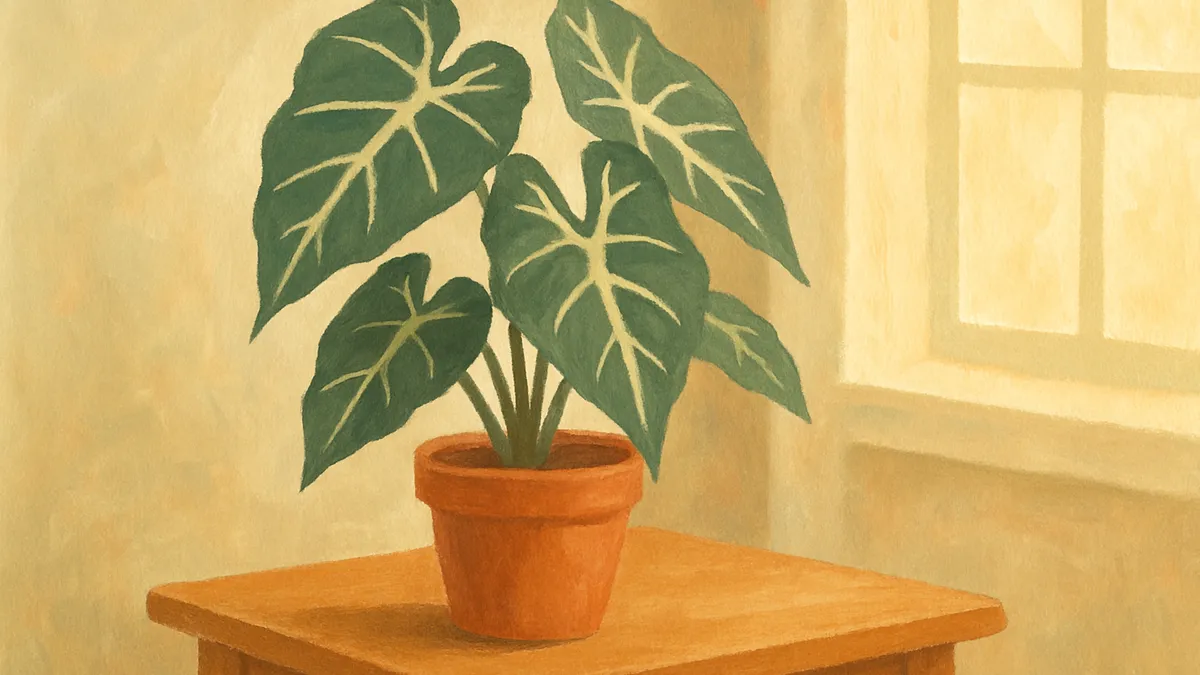
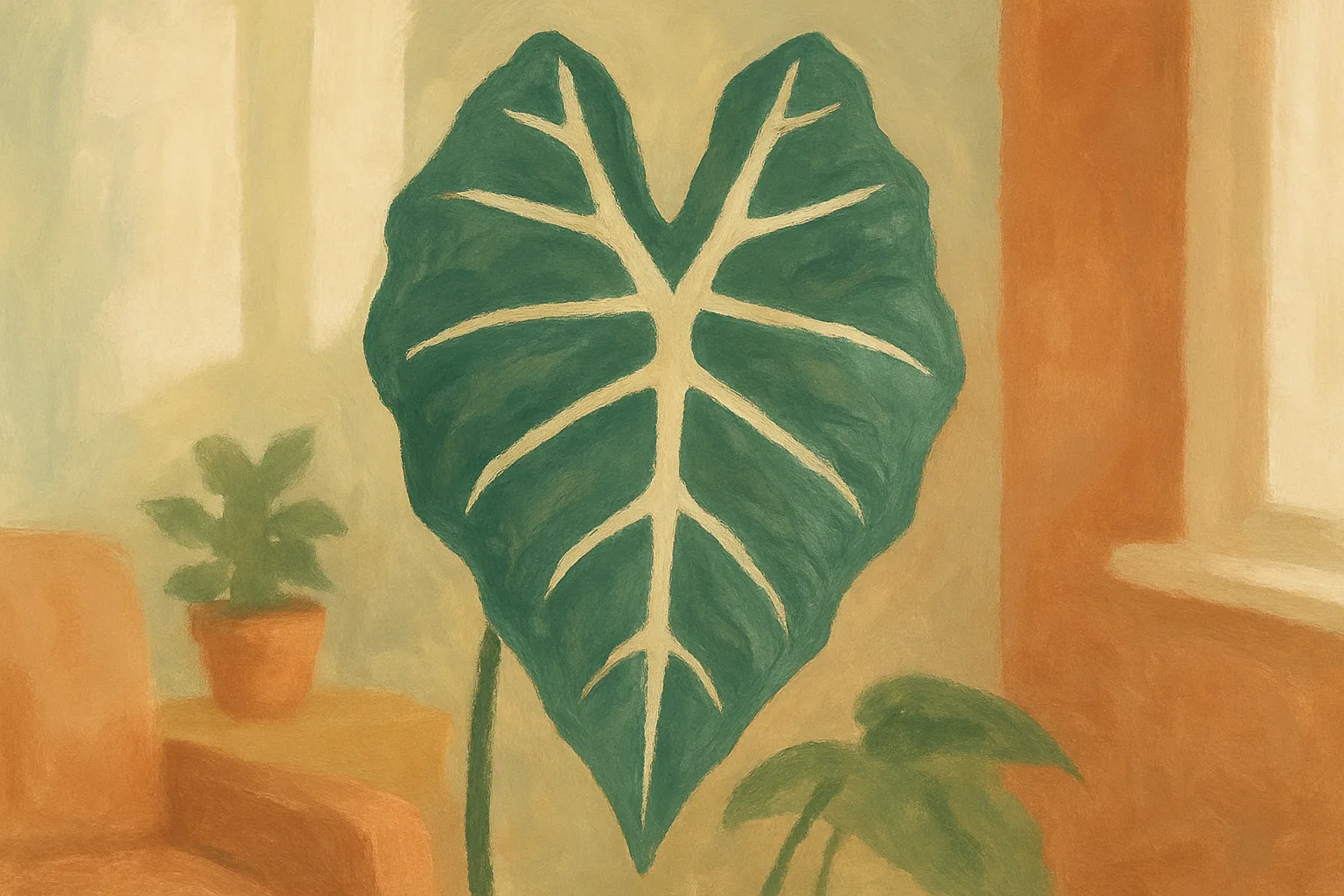
Alocasia, often called elephant ear or African mask plant, grows arrow-shaped leaves with bold veining that make it one of the most dramatic houseplants you can own. It also has a reputation for being difficult, and there is some truth to that: Alocasia is less forgiving than a pothos or a ZZ plant. Most of that reputation comes down to one thing, though. Give it steady humidity and consistent moisture, and it settles in far more easily than people expect.
Light
Alocasia wants bright, indirect light. In its native rainforest understory it grows under a canopy that filters out harsh sun, and indoor light should copy that.
- Best: a spot a metre or two back from a bright east or west window, or right beside a north-facing one.
- Fine: a bright room with no direct sun hitting the leaves.
- Avoid: direct midday sun, which scorches the leaves into pale, papery patches, and deep shade, which produces small, weak new growth.
Watering
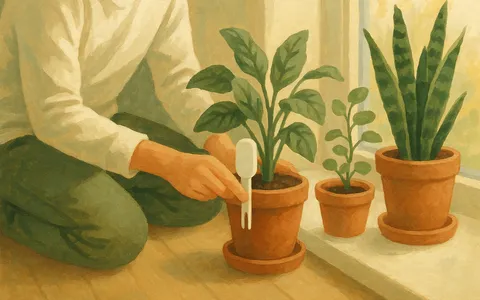
Alocasia likes soil that stays lightly moist, never bone dry and never waterlogged. Water when the top three centimetres of soil have dried out, then water thoroughly until it runs from the drainage holes and empty the saucer straight away.
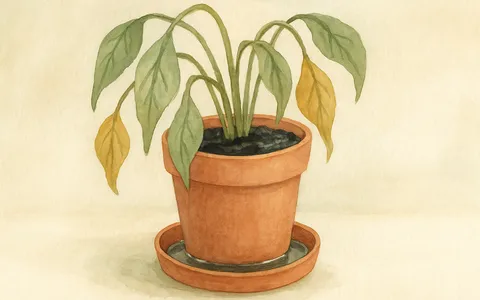
Letting the plant dry out completely causes leaves to droop and curl, and it can cause the plant to drop leaves and retreat to its rhizome to wait out the stress. Overwatering is worse: soggy soil suffocates the roots and leads to rot within days.
If a leaf droops but the soil still feels moist, do not water again. Check the roots instead; drooping with wet soil almost always points to rot, not thirst.
Humidity
This is the part most people underestimate. Alocasia comes from humid tropical forests and struggles in the dry air of a heated home, where leaf edges turn brown and crispy no matter how well you water. Aim for humidity above 50%. A room humidifier gives the most reliable result; grouping plants together and standing the pot on a tray of pebbles and water help a little but rarely enough on their own.
Soil and pot
Use a loose, chunky, well-draining mix rather than dense potting soil. A standard houseplant mix cut with orchid bark, perlite and a little coco coir drains well while still holding some moisture. Always use a pot with drainage holes.
Temperature and feeding
Alocasia is happiest between 18 and 27°C and dislikes cold draughts, air conditioning vents and cold windowsills in winter. Feed with a balanced liquid houseplant fertiliser at half strength every two to four weeks during spring and summer, and stop feeding in autumn and winter while growth slows.
Repotting
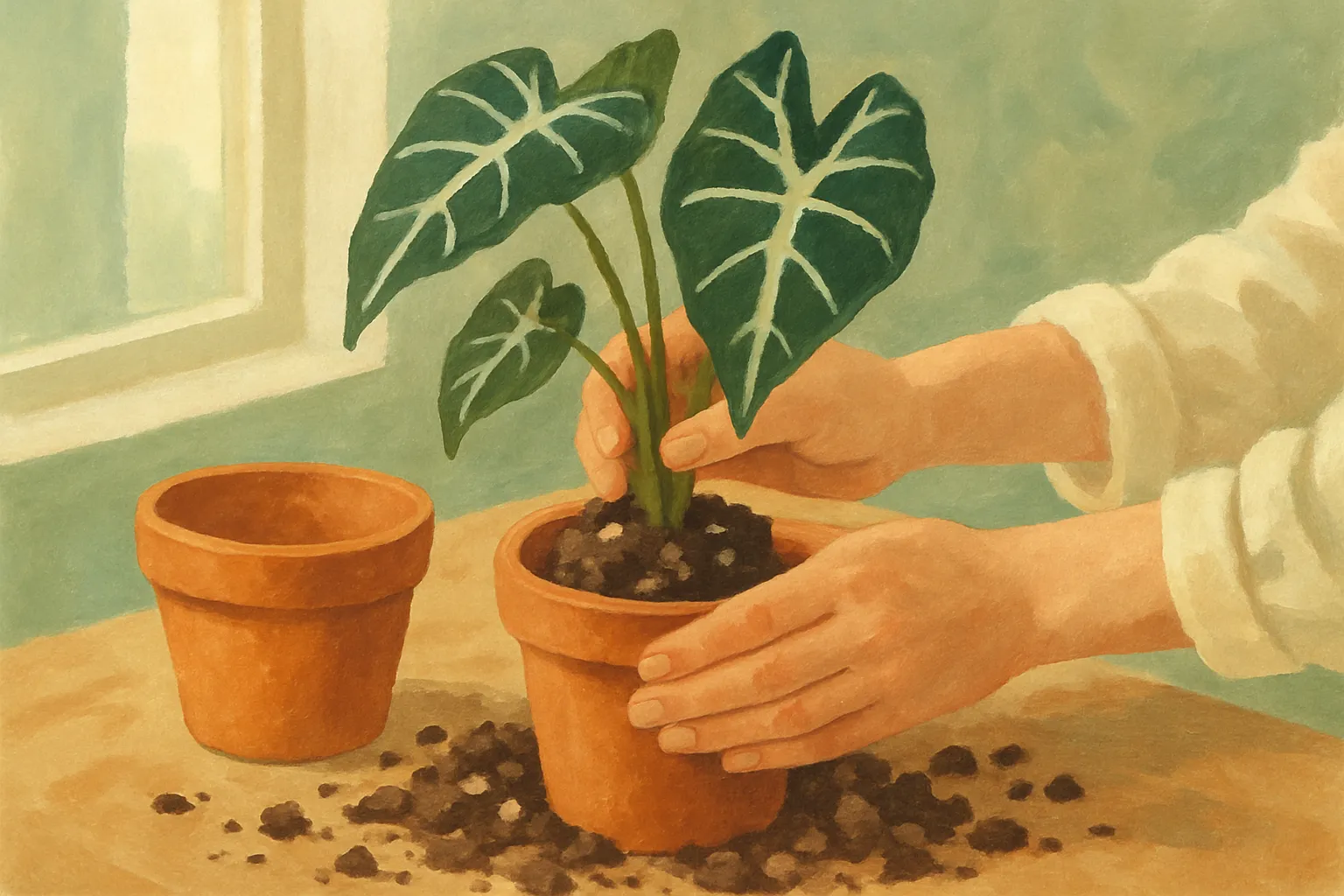
Repot in spring when roots circle the bottom of the pot, usually every one to two years.
- Water the plant a day beforehand so the root ball slides out cleanly.
- Choose a pot only one size larger, with drainage holes.
- Gently loosen the roots and remove any that are dark, mushy or hollow.
- Set the plant at the same depth in fresh, chunky mix.
- Keep it out of direct sun for a week or two while it settles.
Propagation
Alocasia grows from an underground rhizome that produces offsets, or pups, alongside the main plant. At repotting time, separate a pup that has a few roots of its own with a clean knife and pot it into its own chunky mix. Keep it warm, humid and out of direct light until new growth appears.
Common problems
- Yellowing lower leaves: often normal aging if it is just one or two older leaves; frequent yellowing points to overwatering.
- Brown, crispy leaf edges: low humidity or a build-up of mineral salts from tap water. Raise the humidity and flush the soil with plain water every few months.
- Drooping leaves despite moist soil: check the roots for rot, or consider that the plant may be entering dormancy.
- No new growth in autumn or winter: normal. Alocasia often slows down or goes dormant in the colder, darker months and picks back up in spring.
A note on safety
Like most aroids, Alocasia contains calcium oxalate crystals that irritate the mouth and stomach if chewed. Keep it away from curious pets and small children.
Alocasia rewards a bit of extra attention with genuinely striking leaves. Keep the humidity up, let the soil dry a little between waterings and never let it sit wet, and it will settle into a reliable, dramatic addition to a plant collection.