How to care for a Hoya carnosa (wax plant)
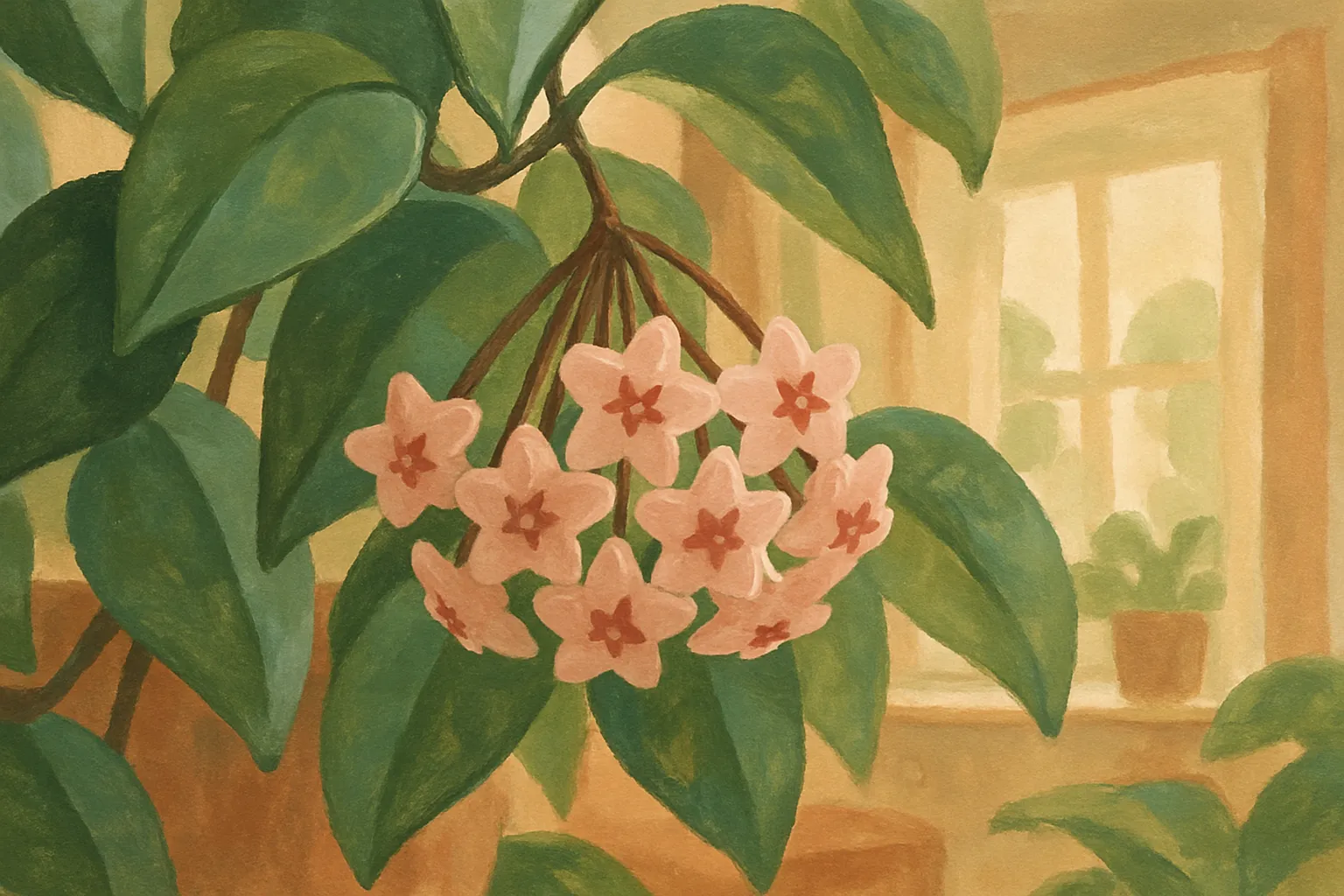
The Hoya carnosa, commonly called the wax plant for its thick, glossy, almost plastic-looking leaves, is a trailing vine that rewards patience more than attention. It stores water in those fleshy leaves the way a succulent does, so it wants to dry out well between waterings, and it wants real light to grow fast and eventually bloom. Left on a dim shelf it simply sits there for years. Given a bright window and time to settle in, it fills into a long, cascading vine and, if you are lucky, produces clusters of small, star-shaped, waxy flowers with a honey-sweet scent.
Light
A wax plant needs more light than its tough, forgiving reputation suggests. It tolerates medium light without dying, but it only grows strongly and flowers in bright light.
- Best: a few hours of gentle direct morning or evening sun, or a spot right in front of an east or west window.
- Fine: bright indirect light a step back from a south-facing window.
- Avoid: harsh midday sun through unfiltered glass, which bleaches the leaves pale yellow, and deep shade, which stalls growth and flowering completely.
Watering
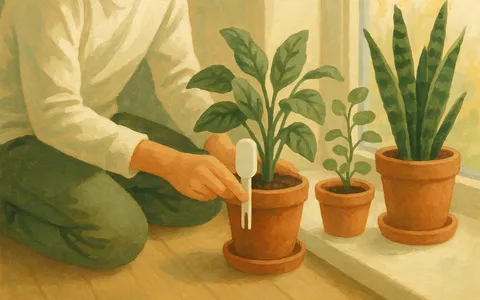
Treat a wax plant more like a succulent than a foliage plant. The thick leaves hold a reserve of water, so moist soil does far more harm than a dry spell.
- Wait until the soil is completely dry through the pot, not just at the surface.
- Water thoroughly until it runs from the drainage holes.
- Let the pot drain fully and empty the saucer; never leave it standing in water.
- In winter, when growth slows, stretch the gap between waterings even further.
A wax plant that has gone too long without water simply looks slightly wrinkled, which plumps back up at the next watering. One that stays wet develops soft, dark, rotting stems that rarely recover.
Lift the pot before you water. A wax plant that is ready for water feels noticeably lighter than one that still has moisture in the soil, and that single habit catches most watering mistakes before they start.
Soil and pot
Use a loose, fast-draining mix rather than dense, water-retentive potting soil. A standard houseplant mix amended with extra perlite or orchid bark works well, and a ready-made mix for orchids or succulents is fine too. The pot must have drainage holes, and a slightly snug pot actually suits a wax plant, which flowers more reliably once its roots are a little crowded.
Humidity, temperature and feeding
Ordinary room humidity is enough, and normal indoor temperatures between 18 and 27 degrees Celsius are comfortable. Keep it away from cold drafts and from heating vents that blast hot, dry air onto the leaves. Feed with a balanced liquid houseplant fertiliser at half strength every four weeks during spring and summer, and stop entirely in autumn and winter.
Getting it to flower
Flowering is the reward most people grow a wax plant for, and it depends on light more than anything else. Give it bright light for most of the day, let it get slightly pot-bound, and feed it during the growing season. Flowers appear on short spurs called peduncles that stay on the plant and rebloom year after year, so resist the urge to trim them off after the blooms fade.
- Do not move the plant once buds have formed, since a sudden change in light can make buds drop before they open.
- Be patient. A young plant or a recent cutting can take a year or more before it blooms for the first time.
Training and propagation
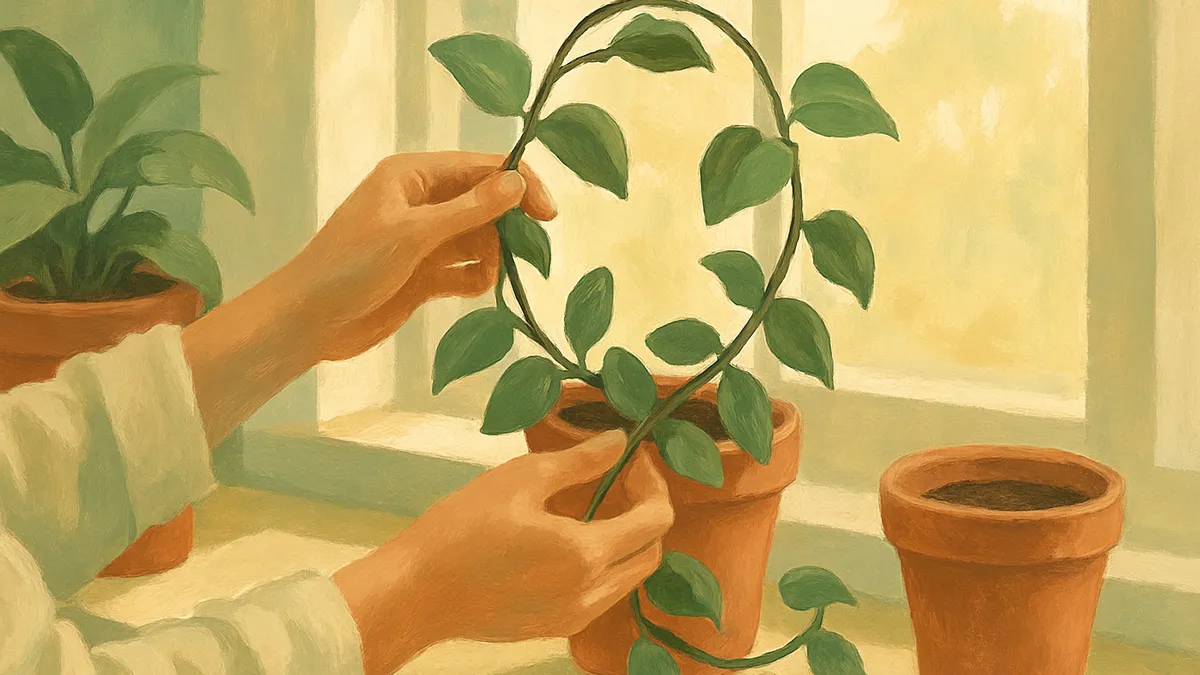
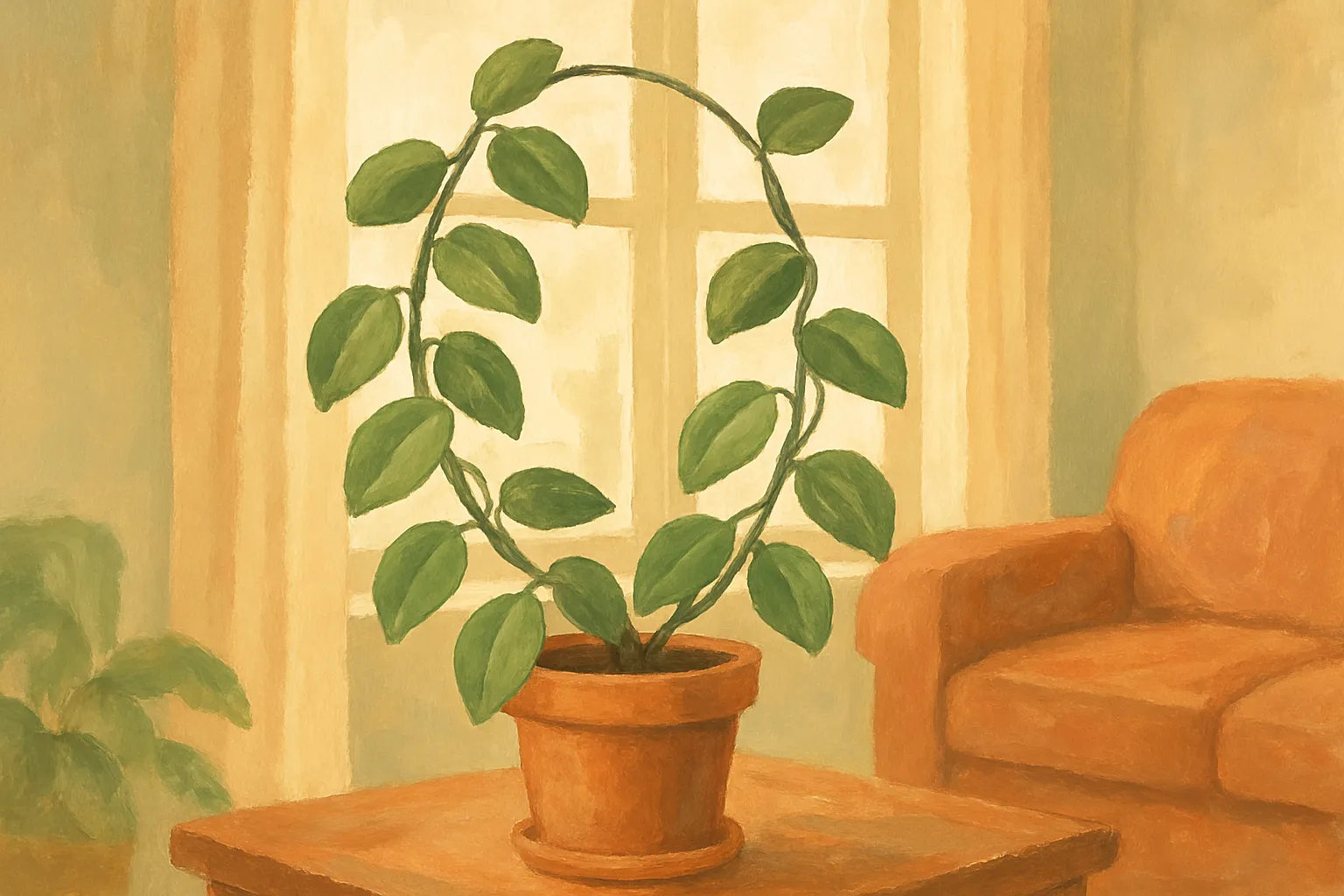
Left alone, a wax plant trails and climbs, so most people train it onto a small trellis, a hoop, or a moss pole, or let it cascade from a hanging basket. Guide new growth gently around the support while it is still soft; older, woodier stems become stiff and harder to bend without snapping. To propagate, cut a length with two or three leaf nodes, let the cut end dry for a few hours, then place it in water or moist soil. Roots usually appear within a few weeks.
Common problems
- Shriveled leaves: underwatering, left too long between drinks. A thorough soak fixes it within a day.
- Soft, mushy, dark stems: overwatering or soil that stays wet. Let it dry out fully, and in serious cases cut away the rotten parts and reroot healthy cuttings.
- No flowers after years of growth: usually too little light. Move it closer to a bright window.
- Sticky residue on leaves or the floor beneath: the flowers produce nectar, which is normal, not a pest.
A wax plant asks for very little: bright light, a pot that drains, and a watering can that stays on the shelf until the soil is properly dry. Meet those three conditions and it will quietly grow longer every year, eventually rewarding you with fragrant, waxy flowers that last for weeks.