Houseplants and pets: toxic or safe?
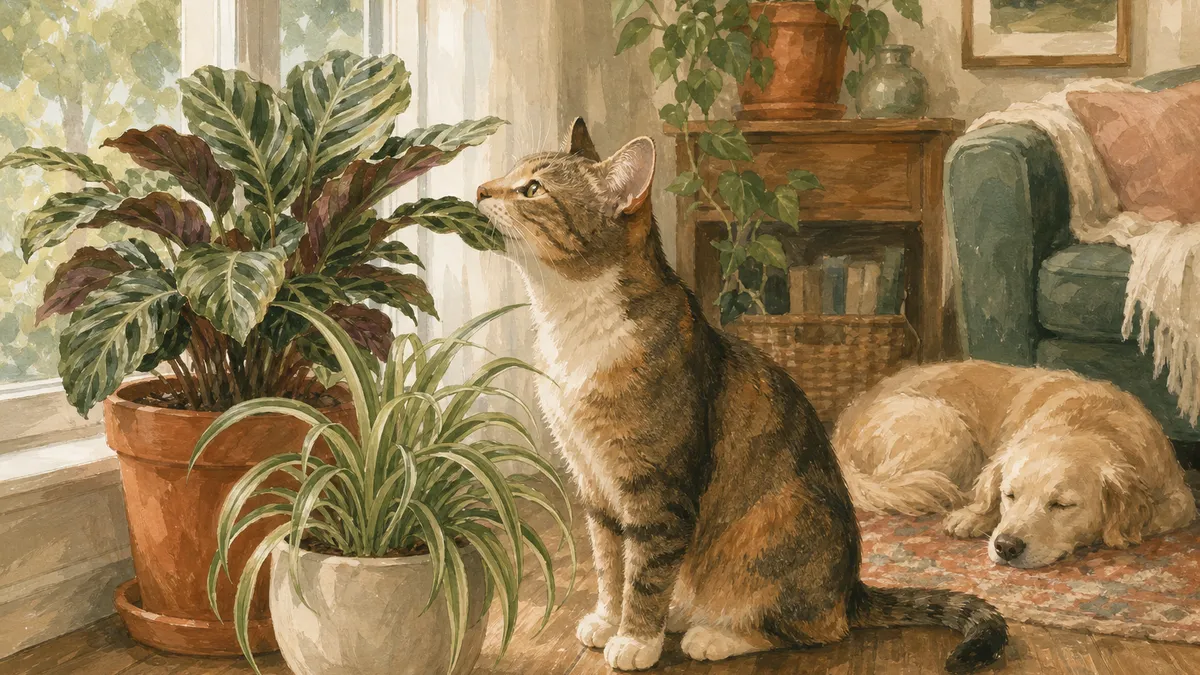
Cats and dogs are curious. Many cats love to nibble on narrow, grassy leaves, and a young dog will chew on anything that falls on the floor. Usually that turns out fine, but a few popular houseplants can make your pet seriously ill. In this guide you will learn which plants are toxic, which are considered safe and what to do if something does go wrong.
Why some plants are toxic
Plants protect themselves with substances that deter animals. With houseplants, it usually comes down to two types of toxin.
Many plants in the arum family contain calcium oxalate crystals. These are tiny, sharp needles that prick the tissues of the mouth and throat when an animal chews the plant. That hurts immediately, so many animals quickly stop chewing. Other plants contain substances that, if swallowed, can damage organs such as the kidneys, liver or heart. These can be more deceptive, as symptoms may take time to appear.
Plants to keep out of reach
Lilies: deadly to cats
True lilies (Lilium) and daylilies (Hemerocallis) can be fatal to cats. Even a small piece of leaf or flower, pollen licked from the cat’s coat or a sip of vase water can cause serious kidney damage. If you have a cat, do not bring lilies into your home.
The arum family
This family includes many well-known foliage plants:
- Monstera deliciosa
- pothos and Philodendron
- peace lily (Spathiphyllum)
- Dieffenbachia
- ZZ plant and Alocasia
Chewing on these plants causes pain in the mouth, heavy drooling and sometimes vomiting. The effects are usually limited to irritation, but the mouth and throat can swell. If your pet has difficulty swallowing or breathing, call your vet immediately. Keep these plants in a room your pet cannot get into.
Other plants to watch out for
The sago palm (Cycas revoluta) is highly toxic to dogs and cats. All parts can cause serious liver damage, and the seeds are especially dangerous. Kalanchoe contains substances that can harm the heart. Aloe vera and snake plant often cause vomiting and diarrhoea when eaten, and the jade plant (Crassula ovata) causes vomiting and lethargy. The milky sap of ficus species irritates the mouth and skin.
Plants considered safe
Fortunately, these plants are considered non-toxic to cats and dogs:
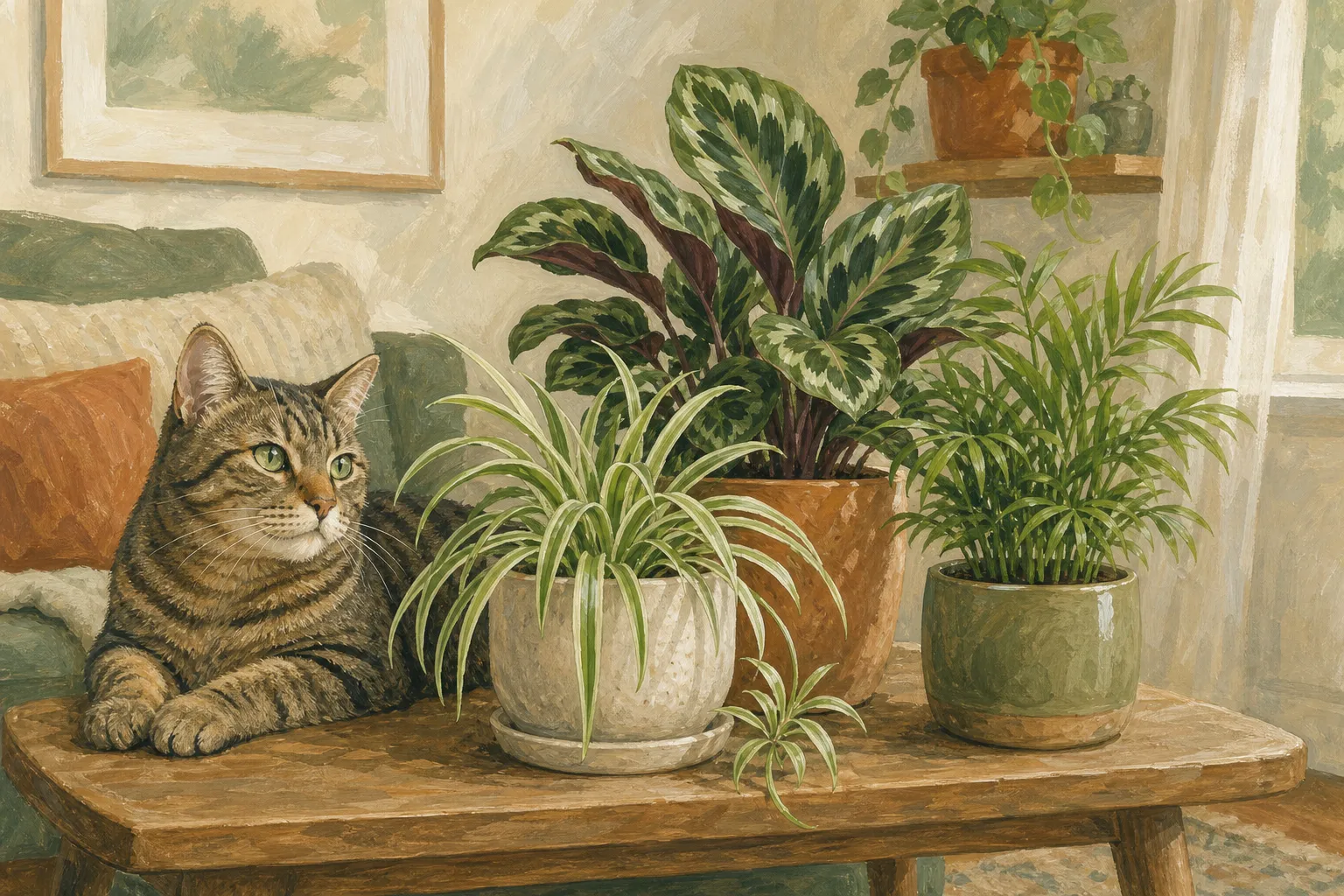
- spider plant (Chlorophytum comosum)
- Calathea and Maranta
- Peperomia and Chinese money plant (Pilea peperomioides)
- Hoya carnosa (wax plant)
- areca palm (Dypsis lutescens) and parlour palm (Chamaedorea elegans)
- Boston fern (Nephrolepis exaltata)
- moth orchid (Phalaenopsis)
- Christmas cactus (Schlumbergera)
Even a safe plant can give a cat or dog an upset stomach if it eats a lot of leaves. Fertilisers and pesticides on the plant or in the potting soil can also make your pet ill.
Not sure whether a plant is toxic? Check the label for the Latin name and use it to look up whether the plant is toxic to cats and dogs. A single common name can be used for several different plants.
Possible signs of poisoning
These symptoms can indicate poisoning:
- heavy drooling or pawing at the mouth
- vomiting or diarrhoea
- poor appetite or difficulty swallowing
- lethargy or withdrawn behaviour
- in cats exposed to lilies: changes in drinking and urination, sometimes followed by passing very little urine
What to do if you suspect poisoning
Acting quickly can make all the difference, especially with lilies and sago palms.
- Move your pet away from the plant. Only remove loose, clearly visible plant material from the mouth if you can do so safely, and do not force the mouth open.
- Call your vet immediately, or contact an emergency vet if your usual practice is closed. Do not wait for symptoms to appear.
- Tell the vet the plant’s name. If you do not know it, have a photo or the label ready if possible, but do not delay calling while you look for one.
- Do not try to make your pet vomit yourself and do not give home remedies. This can worsen the damage caused by some substances.
- Keep a close eye on your pet and follow the vet’s advice.
How to reduce the risk of problems
- Keep toxic plants in a room your pet cannot get into. Hanging planters and high shelves can keep plants out of dogs’ reach, but cats can reach higher than you think.
- Clean up fallen leaves and flowers right away.
- When buying new plants, choose species that are considered safe.
- Put out a pot of cat grass. Some cats prefer to nibble on that, although it is no guarantee they will leave your other plants alone.
Puppies and kittens explore everything with their mouths. While they are young, keep all plants, including species considered safe, and all potting soil out of reach.

In short
Often, the effects are limited to mouth irritation or an upset stomach, but some plants are very dangerous. True lilies and daylilies can be fatal to cats, and the sago palm can cause severe poisoning in dogs and cats. Make sure you know which plants you have at home, keep toxic species out of reach and call your vet straight away if in doubt.