Houseplants in Autumn: Less Light, Less Water
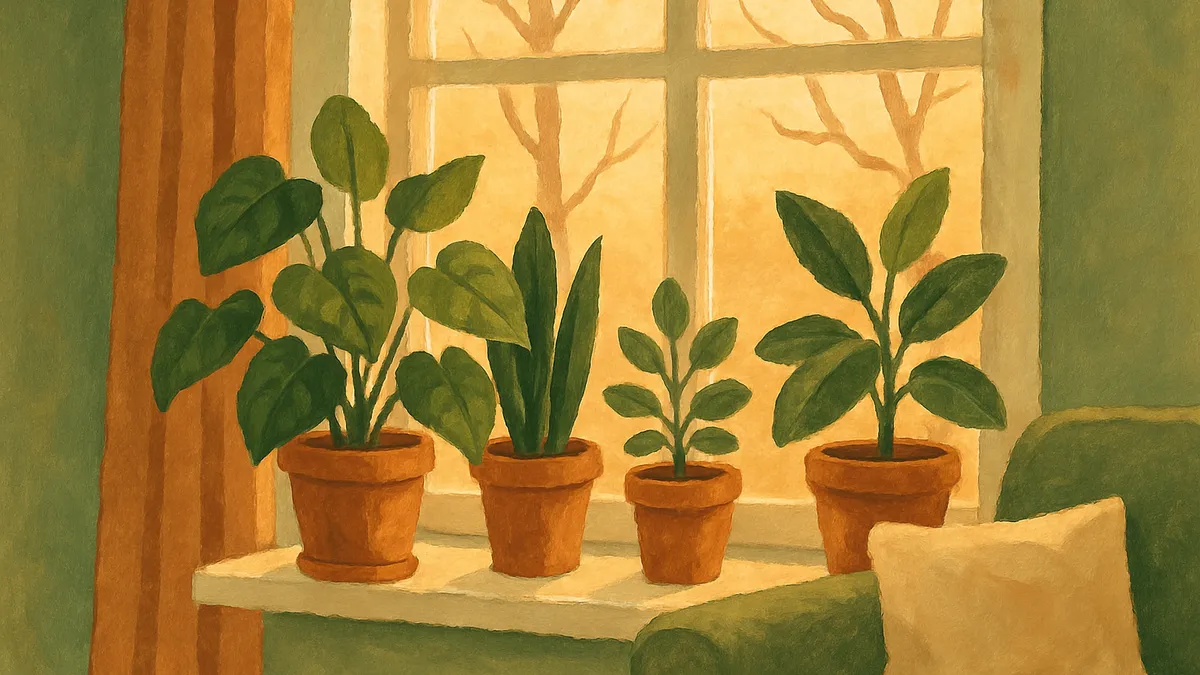
As the days get shorter, conditions indoors change more than you might think. The light by the window gets weaker, the heating goes on and the potting soil stays damp for longer. Your plants slow down, but most of us keep caring for them the way we did in summer. That is where almost every autumn problem comes from: wet roots, limp leaves and panic over a plant that is simply resting.
Less light is the biggest change
The difference in light levels between summer and autumn is greater than you might realise. Our eyes adjust effortlessly, so a room that still feels bright to you is already a lot darker for a plant than it was in summer. Less light means less photosynthesis: fewer new leaves, slower growth and less water use.
Move your plants closer to the window
A spot that was too sunny in summer is often just right now. Move plants from the middle of the room half a metre to a metre closer to the glass. Turn the pot a quarter turn every few weeks so your plant does not lean towards the light as it grows.
Clean the leaves and the windows
A layer of dust on the leaves blocks light, and right now your plant can use every bit it gets. Wipe large, smooth leaves with a damp cloth and clean the windows.
Water less often
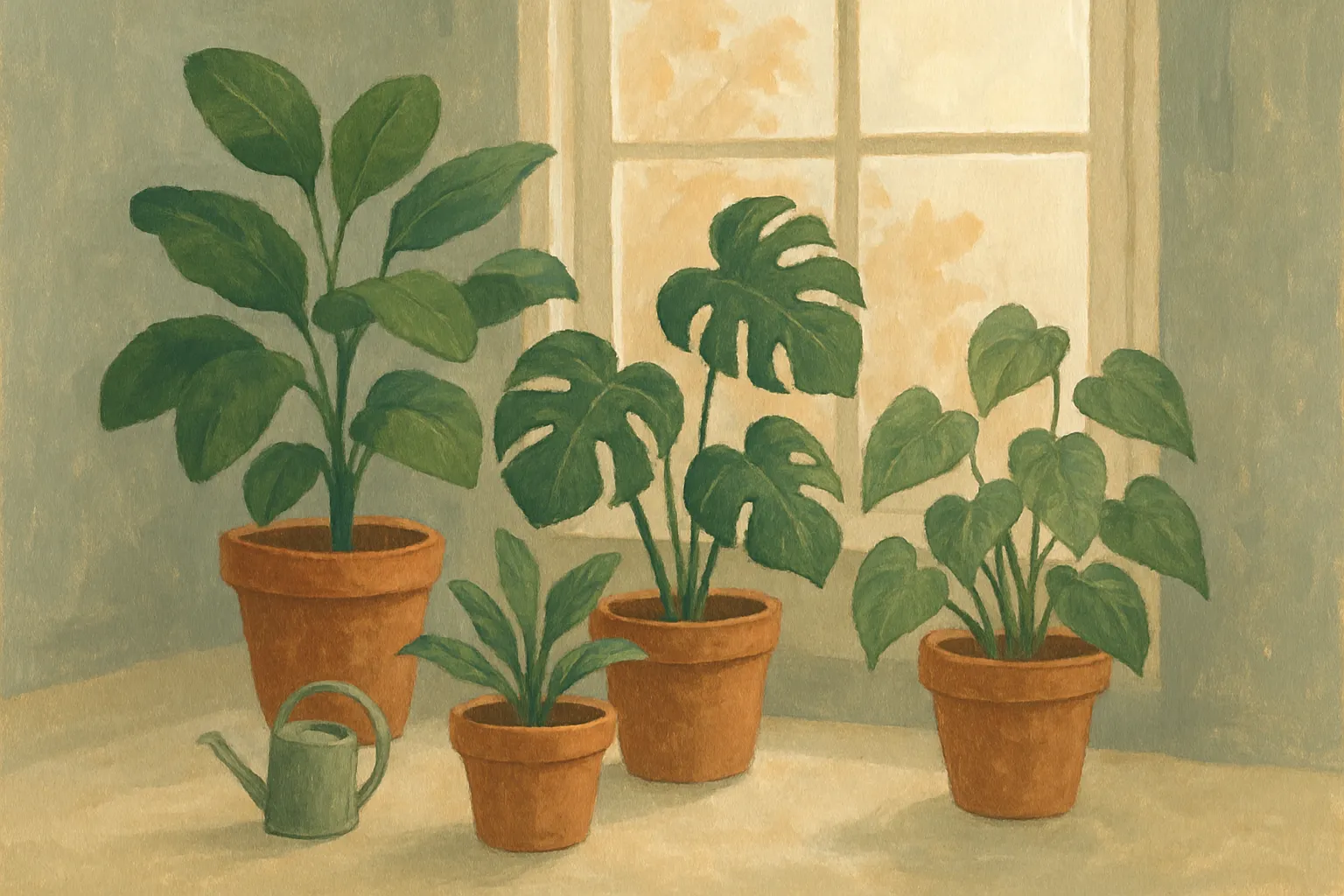
This is where things usually go wrong in autumn. The plant loses less water and the soil dries out more slowly, so if you stick to your August routine you will soon be watering too often. A pot that dried out in four days in summer might now take ten. Forget the schedule and check the soil to decide when to water.
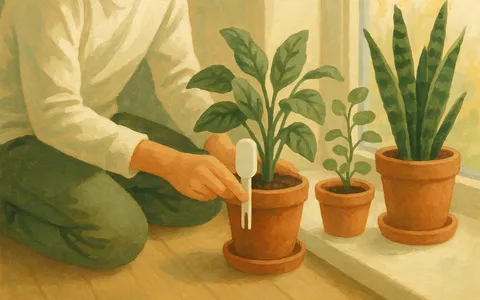
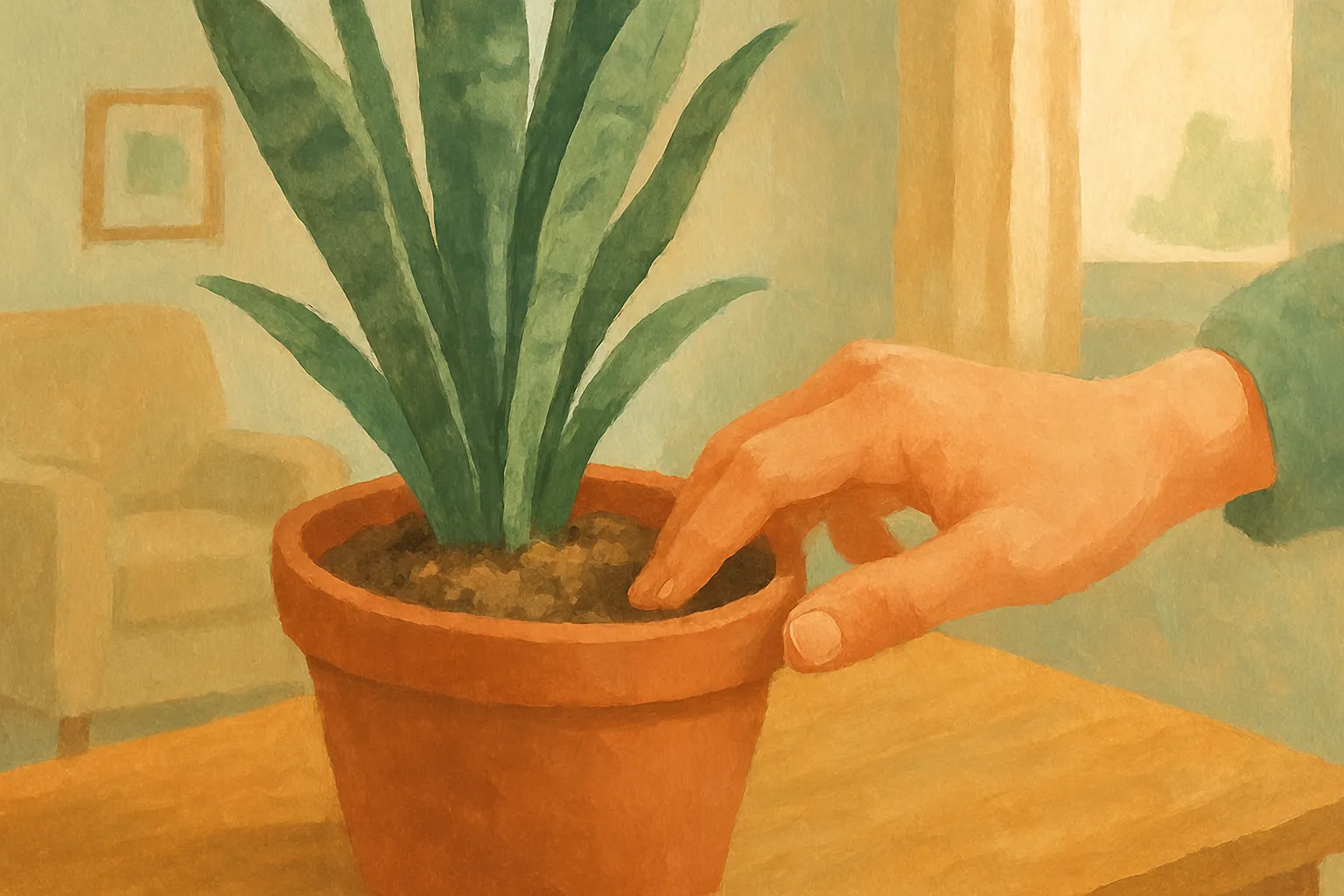
- Push your finger a few centimetres into the soil, or lift the pot and feel how heavy it is.
- If the top layer still feels damp or the pot is heavy, wait a few days and check again.
- If the top layer is dry and the pot is light, water generously until it runs out of the bottom of the pot.
- Let the pot drain, then empty the saucer or decorative pot.
If you measure soil moisture with a sensor, you will see the same pattern in the readings: after watering, the percentage drops much more slowly than in summer. The Urban Jungle Care app compares each reading with your plant’s needs and creates a watering task, so watering times change with the season.
Lift the pot before you water. A pot feels surprisingly light when the soil is dry and heavy when it is wet. You will soon learn to recognise the difference.
Which plants go dormant
Dormancy is not a disease. Many houseplants come from regions with a drier or cooler season and shift down a gear when there is less light. They produce few or no new leaves until the light returns.
- Succulents and cacti: growth all but stops. Keep them cool and almost dry.
- Snake plants and ZZ plants: slow growers that now need very little water, sometimes only a watering every four to six weeks.
- Alocasia: often drops leaves and sometimes dies back completely to its corm. Give it very little water and do not throw it away, because a firm corm will produce new leaves.
- Monstera, pothos and ficus: these keep growing, but much more slowly. New leaves may not appear until spring.
What is normal and what is not
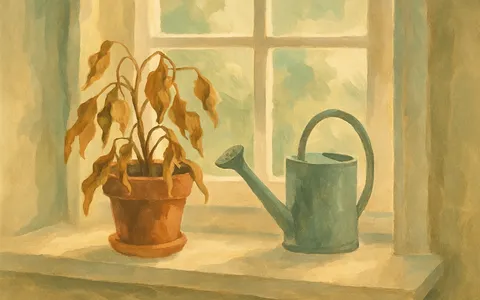
It is normal for growth to stop, for an occasional older leaf at the bottom to turn yellow and for the soil to stay damp for longer. Watch out, though, if many leaves turn yellow and soft at the same time or if the soil stays wet for weeks on end. That points to too much water, not dormancy. Also check that the water drains away properly.
Stop feeding
A plant that is not growing needs little food. If you give your plant as much feed as you did in summer, salts build up in the soil and can burn the roots. Gradually reduce feeding and stop once growth stalls. Only start again when you see new leaves appearing in spring.
Heating, draughts and cold windows
Autumn brings a few new risks indoors. Heating dries out the air, causing the edges of tropical plants’ leaves to turn brown. And a window can cool down a lot at night, so leaves resting against the glass can suffer cold damage.
- Keep a hand’s width between the window and the plant, and do not let any leaves rest against the glass.
- Do not put a pot directly above a radiator. The soil there dries out unevenly and far too quickly.
- Move your plant out of the draught while you give a room a good airing. Cold draughts do more harm than cool air.
In short
In autumn you do not need to do anything new, just less. Let the soil, not the calendar, tell you when to water, move your plants closer to the light and do not panic when growth stalls. Healthy plants will get going again on their own in spring.