Signs of underwatering (and how to bring your plant back)
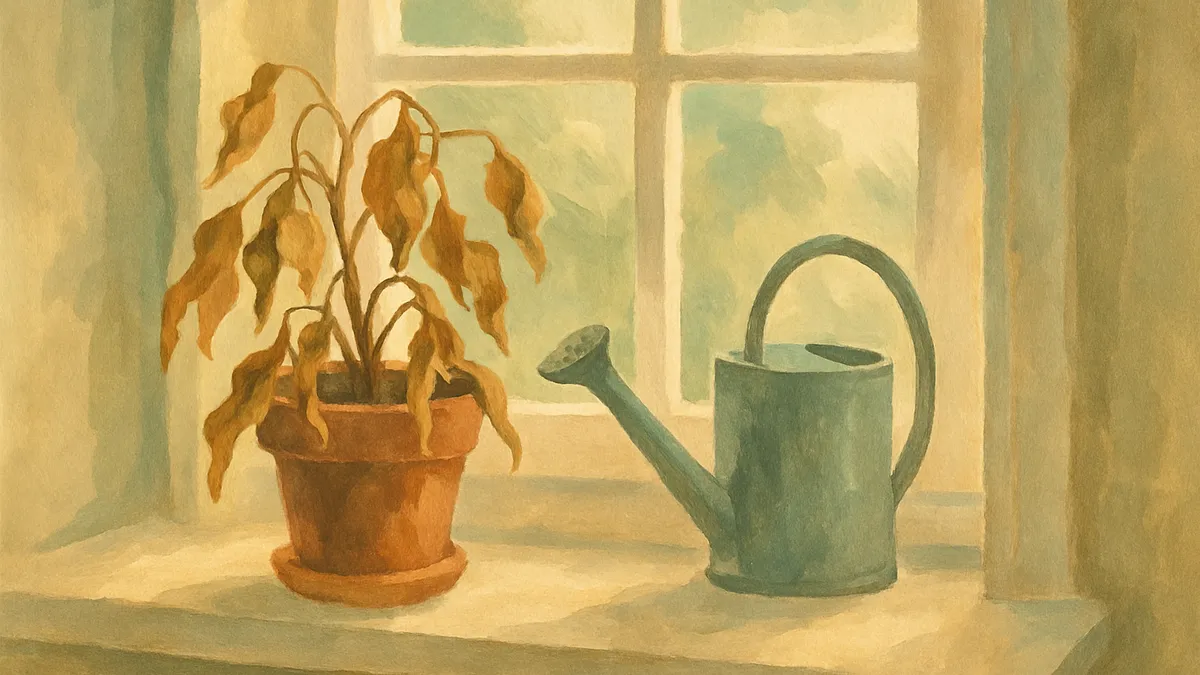
Underwatering rarely kills a plant outright, but left unnoticed it quietly wears a plant down until the leaves are crisp, growth stalls, and the roots are too dry to recover on their own. It is easy to miss because the signs build up slowly and can look like other problems. This guide helps you recognize the real signs, understand what dry soil does to a plant, and bring a thirsty plant back to health.
Why underwatering is so damaging
Water does more than quench a plant. It carries dissolved nutrients from the soil into the roots and keeps the cells inside leaves and stems plump and rigid. When soil dries out completely and stays that way, roots can no longer take up water or the nutrients dissolved in it, and the fine root hairs that do most of the absorbing begin to shrivel and die back.
The irony is that very dry soil can also become hard to rewet. Peat-based mixes especially pull away from the sides of the pot and start to repel water, so a quick pour on top runs straight down the gap and out of the drainage holes without ever soaking into the root ball.
The warning signs
Dry, crispy leaves
Underwatered leaves usually turn yellow or brown at the tips and edges first, and the tissue feels dry, thin, and crisp rather than soft. Older leaves often go first, but new growth can be affected too if the dry spell is severe.
Drooping and curling
Leaves and stems lose their rigidity and droop, and broad leaves often curl inward or along the edges to reduce the surface they expose to the air.
Soil pulling away from the pot
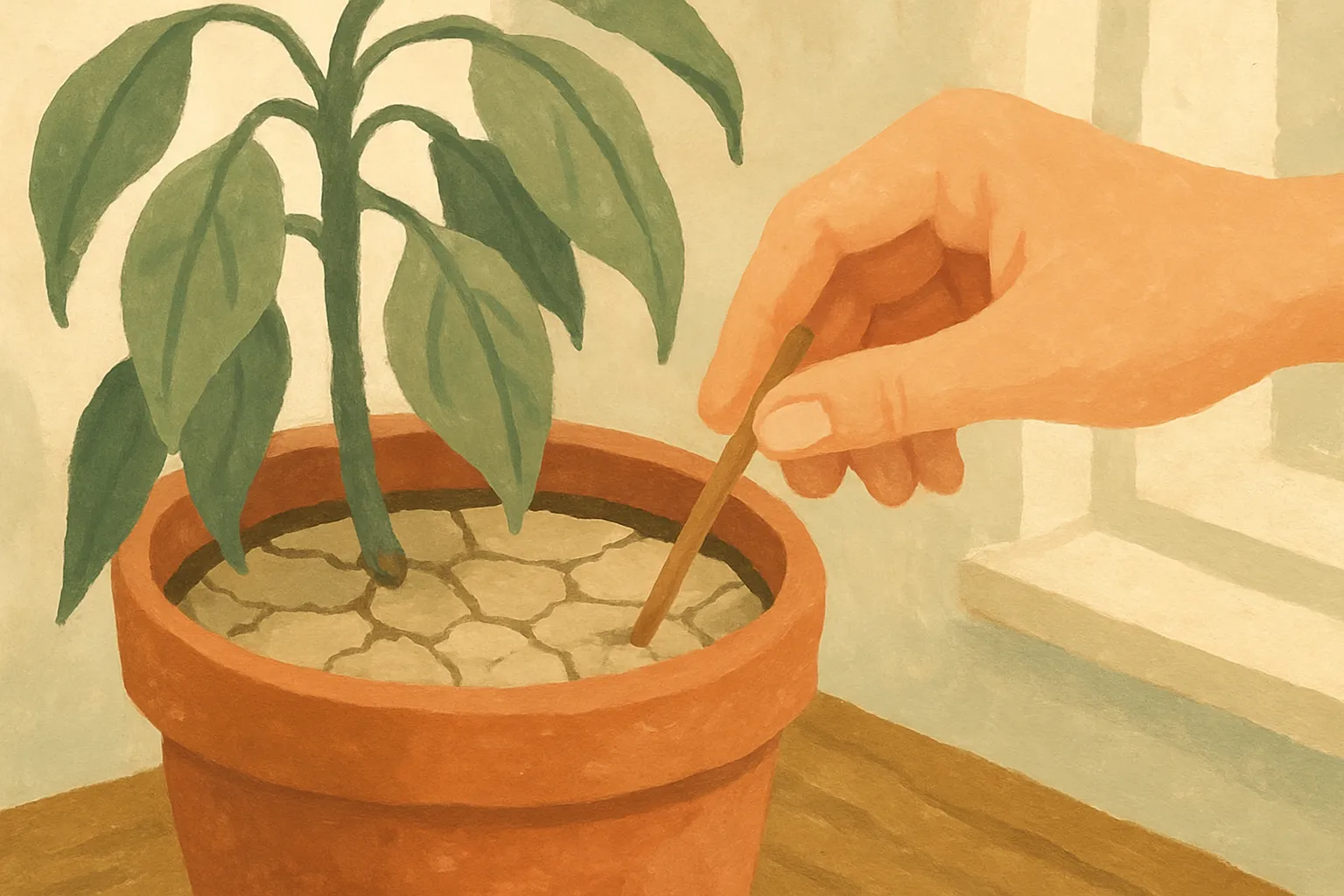
Look at the edge of the pot. If the soil has shrunk and pulled away from the sides, or the whole pot feels unusually light when you lift it, the root ball has dried out.
Slow or stalled growth
A thirsty plant stops producing new leaves, and the leaves it does grow may come in smaller than usual as the plant conserves what little water it has left.
Lift the pot before you look at the leaves. A plant that badly needs water feels noticeably lighter than one with moist soil, often before any visible sign of stress shows.
How to revive an underwatered plant
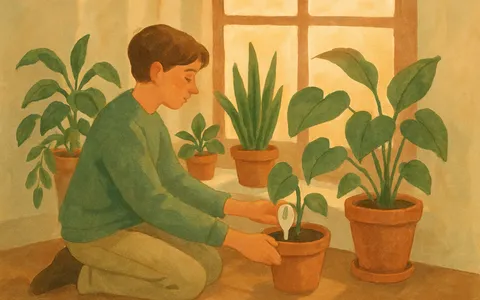
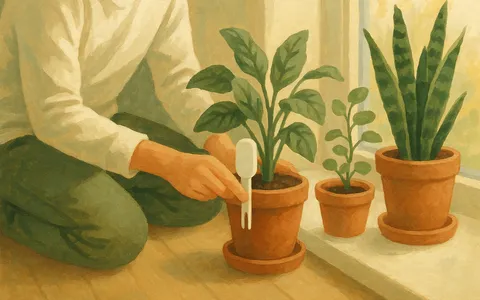
- Check how dry the soil really is. Push a finger or a wooden skewer a few centimeters into the soil. If it comes out clean and dusty, the root ball is thoroughly dry.
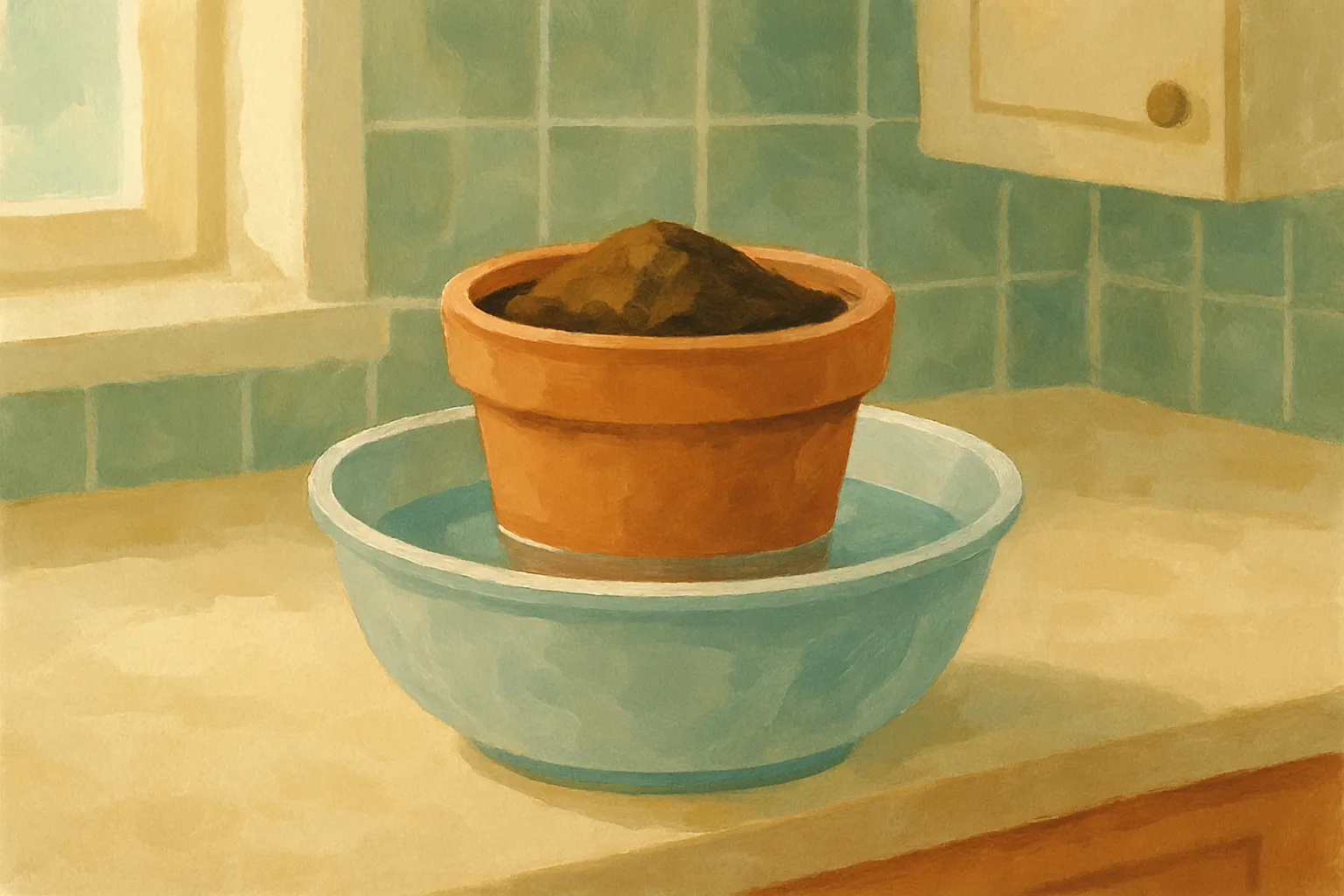
- Soak instead of sprinkling. Set the pot in a basin or sink with a few centimeters of room-temperature water and let it sit for 20 to 30 minutes so water can wick up from below. This also gets around soil that has pulled away from the pot and would otherwise shed water poured on top.
- Water from the top too. After soaking, water from the top until it runs through the drainage holes, so the whole root ball ends up evenly moist, not just the bottom.
- Trim the worst damage. Leaves that are fully brown and crisp will not recover their color. Snip them off once the plant has stabilized, so it can put its energy into new growth instead.
- Ease back into a rhythm. Move the plant out of strong direct sun for a few days while it recovers, then go back to checking the soil regularly instead of leaving long stretches between waterings.
Preventing it from happening again
- Check the soil with your finger or a moisture sensor instead of watering on a fixed calendar.
- Match the schedule to the plant and the season, since a plant uses far less water in low light or in winter.
- Group thirstier plants together so none of them gets skipped on a watering round.
- Use a pot that is not oversized, since a small root ball in a large volume of soil dries unevenly and is easy to misjudge.
- If you travel often, consider a self-watering pot or wicking system rather than one big dose of water right before you leave.
The takeaway
Underwatering is quieter than overwatering, so it tends to sneak up on people who only check their plants once a week. Crisp, curling leaves and a pot that feels unusually light are the clearest clues. Soak the root ball thoroughly rather than sprinkling little and often, and most underwatered plants push out fresh green growth again within a couple of weeks.