How to care for a ZZ plant
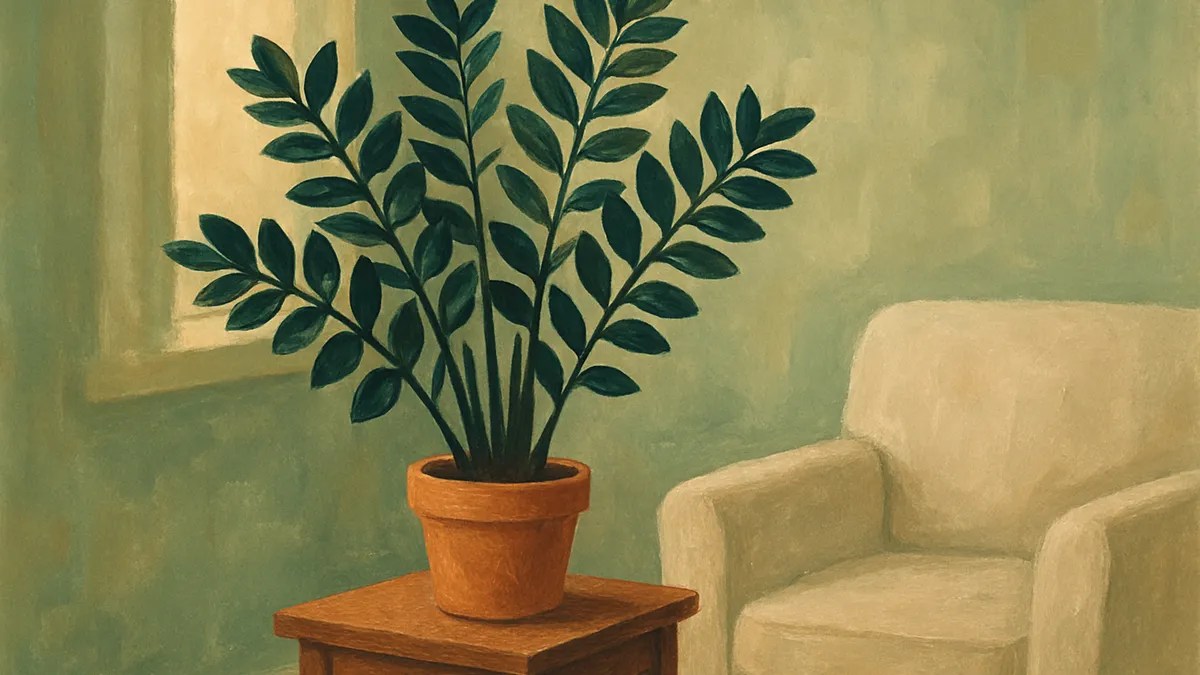
The ZZ plant (Zamioculcas zamiifolia) has a reputation as the plant you cannot kill, and for once the reputation is deserved. It grows from thick underground rhizomes that store water, its waxy leaves lose very little moisture, and it shrugs off dim corners that would starve most other houseplants. That makes it a perfect first plant, an easy office plant, and a reliable filler for the darker spots of a home. The few ZZ plants that do die almost always die of kindness: too much water, too often.
Light
A ZZ plant tolerates low light better than almost any other houseplant, but tolerating is not the same as thriving. In a dim hallway it will hold its leaves for months and grow slowly, if at all. In bright, indirect light it pushes out new stems every spring and summer and keeps a deep, glossy green.
- Best: a few metres from an east or north window, or beside a bright window with a sheer curtain.
- Fine: a corner of a room that gets daylight but no direct sun.
- Avoid: hours of direct afternoon sun, which scorches the leaflets and leaves pale, papery patches.
Watering
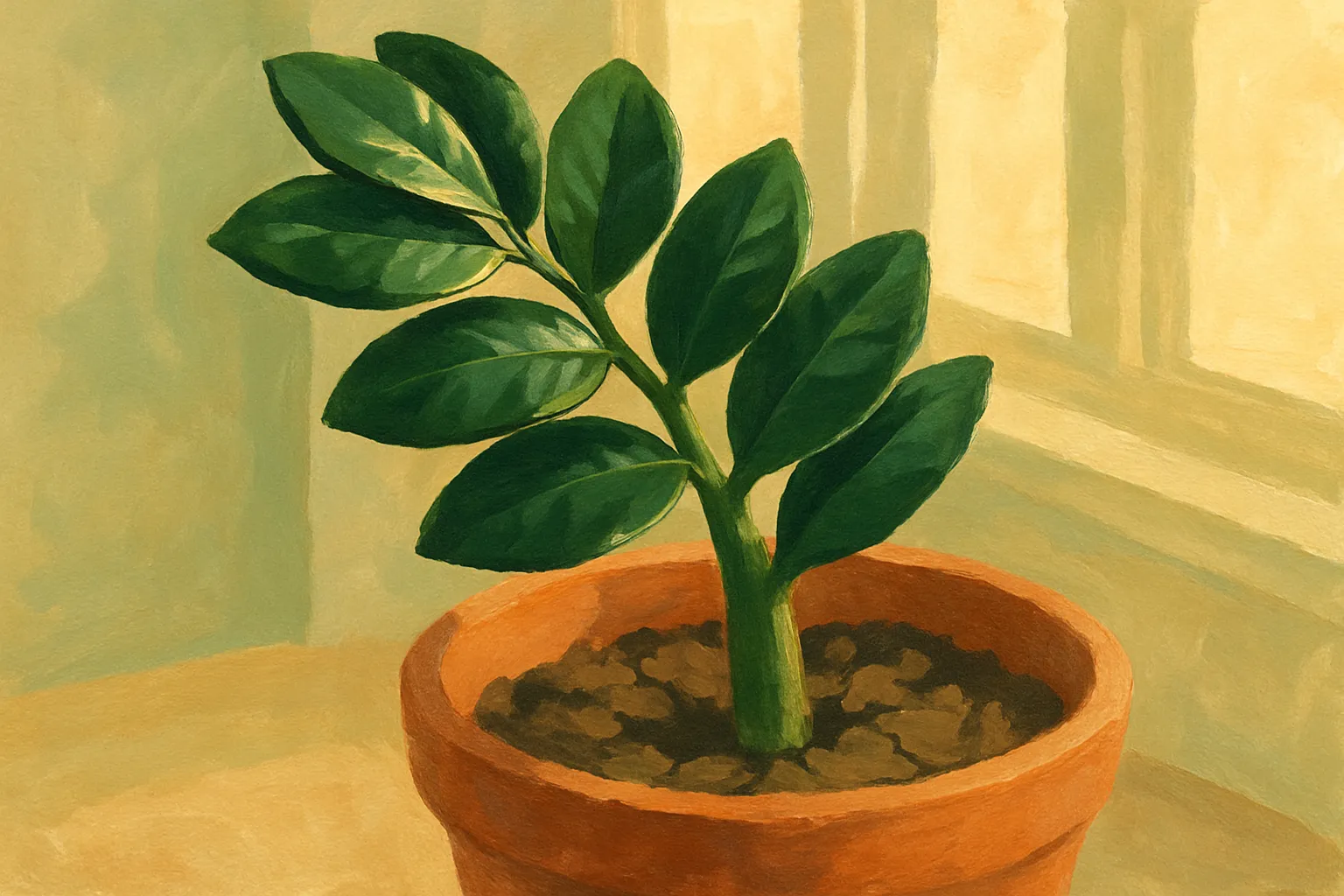
This is the part that matters. The rhizomes under the soil work like small water tanks, so the plant is built to go through dry spells. Water when the soil is dry most of the way down, not just at the surface, then water thoroughly until it runs out of the drainage holes and empty the saucer.
How often that is depends on light, temperature and pot size:
- In bright light during spring and summer: roughly every two to three weeks.
- In lower light or during winter: every four to six weeks is normal.
If you are unsure, wait. A ZZ plant that is a week overdue for water looks exactly the same. A ZZ plant that has been kept wet for a month is on its way to rhizome rot.
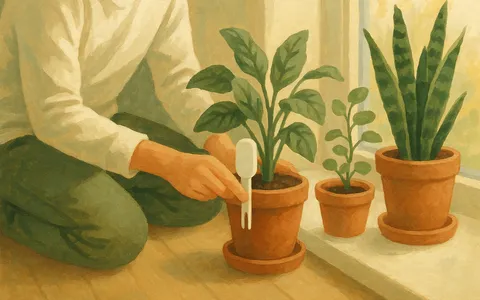
Push a wooden skewer or your finger deep into the pot before you water. If it comes out cool or with soil clinging to it, the plant does not need water yet.
Soil and pot
Use a free-draining mix. A standard houseplant potting soil with a generous handful of perlite, pumice or coarse sand works well, and a ready-made cactus and succulent mix is also fine. Whatever you choose, the pot must have drainage holes.
Temperature and humidity
Normal room temperatures suit a ZZ plant perfectly. It is comfortable between 18 and 26 degrees Celsius and copes with short dips to around 10 degrees, though it stops growing below 15. Ordinary indoor humidity is enough. There is no need to mist.
Feeding
A ZZ plant is a light feeder. Give a balanced liquid houseplant fertiliser at half strength once a month during spring and summer, and stop entirely from autumn until the days lengthen again.
Repotting
Repot every two to three years, or when the rhizomes start pushing against the sides of the pot.
- Water the plant a day or two before so the root ball slides out more easily.
- Choose a pot only one size larger, with drainage holes.
- Loosen the root ball gently and remove any mushy or dark rhizomes.
- Set the plant at the same depth as before in fresh, well-draining mix.
- Wait a week before watering to let any damaged roots heal.
Propagation
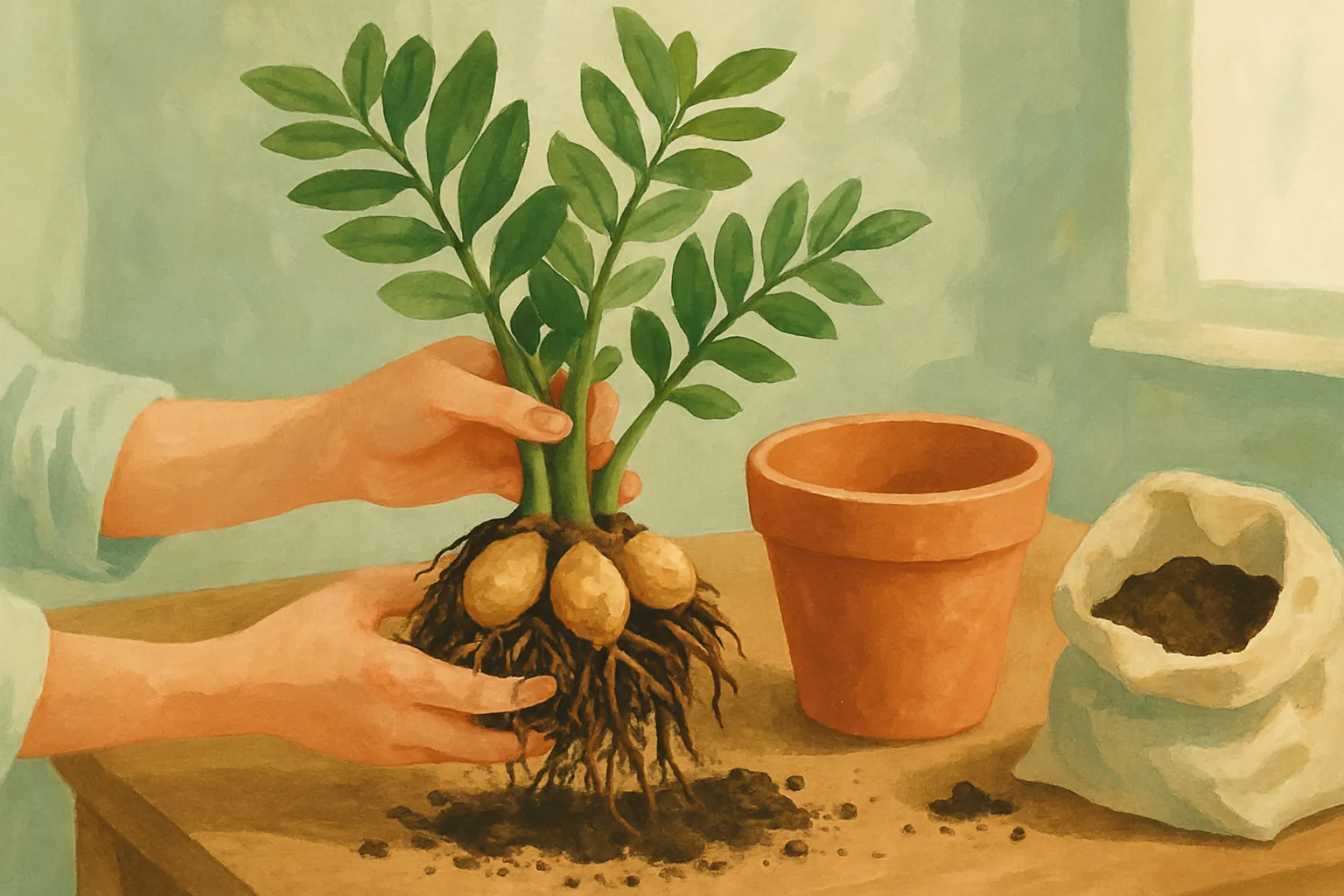
Division is the easy route: at repotting time, split off a clump of rhizomes with its own stems and pot it separately. Stem and leaf cuttings root in water or moist soil too, but a leaf cutting can take most of a year to look like a plant.
Common problems
- Yellow, soft stems at the base: overwatering. Unpot, cut away rotten rhizomes, let the plant dry for a few days and repot in fresh, dry mix.
- Wrinkled or drooping stems: the reserves are finally used up. One thorough drink and it plumps up within days.
- Pale or scorched leaflets: too much direct sun. Move it a little further from the window.
- Slow or no growth: normal in winter and low light. In summer in a bright spot, the plant is probably root-bound or hungry.
A note on safety
All parts of the ZZ plant contain calcium oxalate crystals, which irritate the mouth and stomach if chewed. Keep it out of reach of curious pets and small children.
Give a ZZ plant decent light, a pot that drains and a watering can you only pick up occasionally, and it will look good for years with almost no attention.