How to care for a Monstera deliciosa
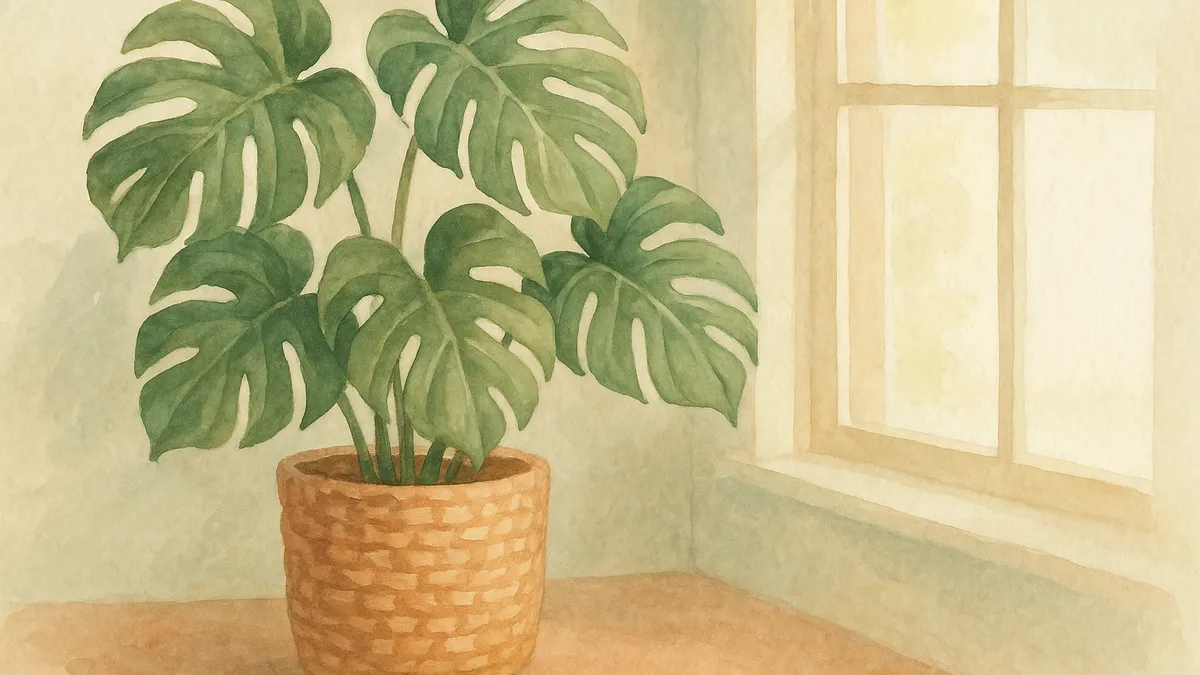
The Monstera deliciosa, often called the Swiss cheese plant, is one of the most rewarding houseplants you can grow. Its large, glossy leaves with their signature holes (called fenestrations) make it a showpiece in any room. The good news is that Monsteras are forgiving plants once you understand what they actually want. This guide walks you through everything you need to keep yours thriving.
Light: bright but indirect
In the wild, a Monstera climbs up tree trunks and lives under the dappled canopy of a rainforest. That tells you exactly what it prefers at home: bright, indirect light. A spot a meter or two back from an east- or west-facing window is close to ideal.
Avoid harsh, direct midday sun, which can scorch the leaves and leave brown, crispy patches. On the other end, a Monstera kept in a dim corner will survive but grow slowly, produce smaller leaves, and often fail to develop those iconic holes. If your plant is stretching toward the window with long gaps between leaves, it is asking for more light.
Watering: let the top dry out
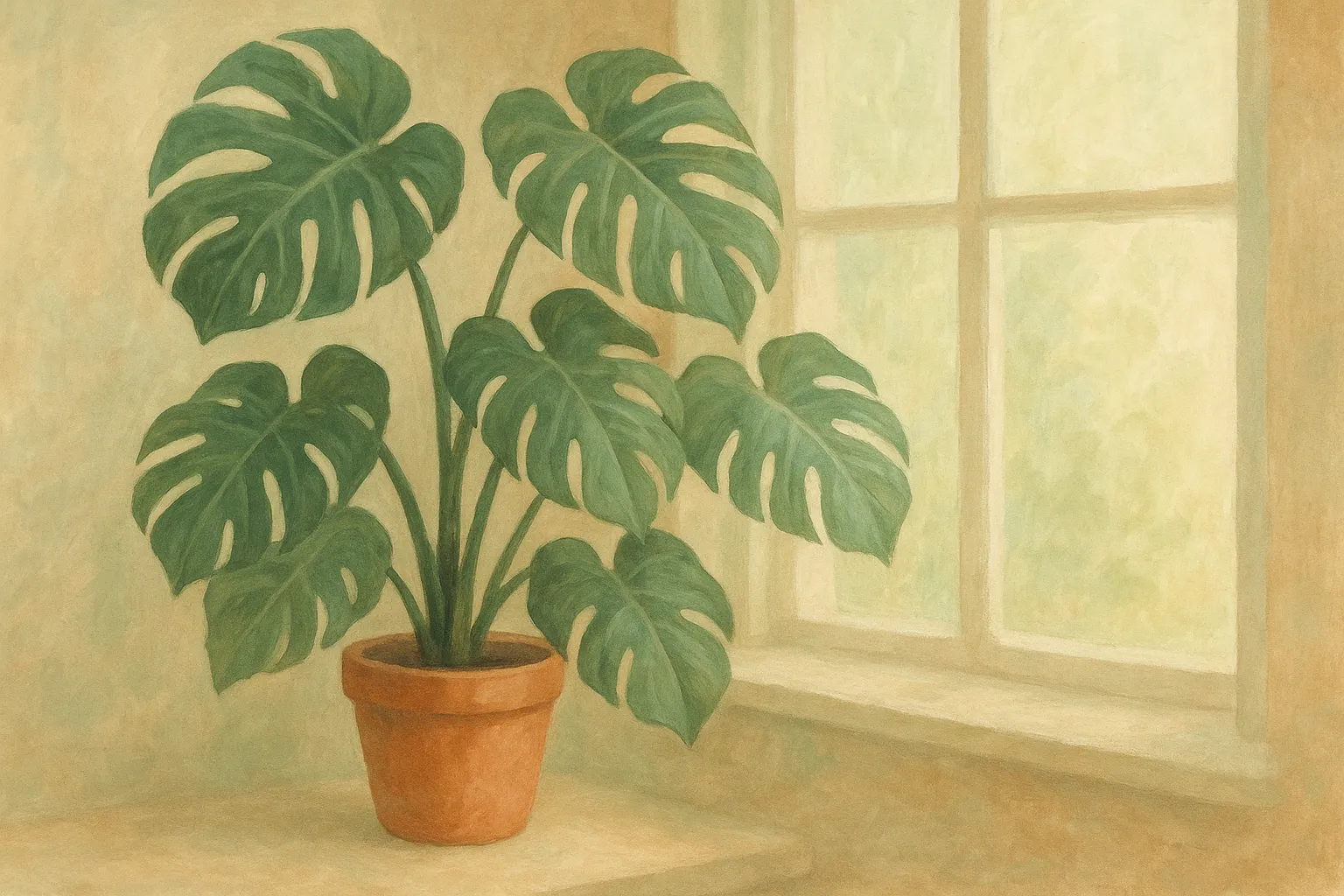
More Monsteras are killed by overwatering than by anything else. The rule is simple: water thoroughly, then let the top few centimeters of soil dry out before watering again.
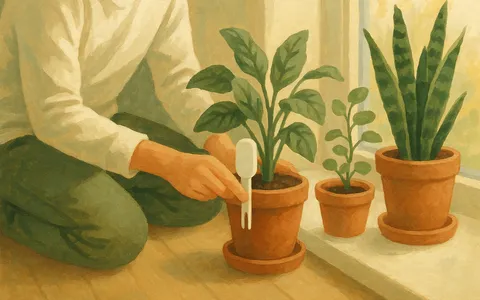
Stick your finger about 5 cm into the soil. If it feels dry, it is time to water. If it still feels moist, wait a few more days. When you do water, add enough that it drains freely from the bottom of the pot, then empty the saucer so the roots are never sitting in standing water.
In practice this usually means watering once a week in summer and every ten to fourteen days in winter, but always check the soil rather than watering on a fixed schedule.
Humidity and temperature
As a tropical plant, the Monstera enjoys higher humidity than most homes naturally provide. It will tolerate average household air, but it truly thrives around 60 percent humidity. If your leaves develop brown, papery edges, low humidity is a likely culprit.
You can raise humidity by grouping plants together, using a pebble tray, or running a small humidifier nearby. Keep your Monstera in a room between 18 and 27 degrees Celsius, and away from cold drafts and heating vents, which dry the air quickly.
Wipe the big leaves with a damp cloth every few weeks. Dust blocks light, so clean leaves photosynthesise better and simply look glossier.
Feeding
During the growing season, from spring through early autumn, feed your Monstera with a balanced liquid houseplant fertilizer roughly once a month. Dilute it to half strength to avoid burning the roots. In late autumn and winter, growth slows dramatically, so pause feeding until spring returns.
Support and climbing
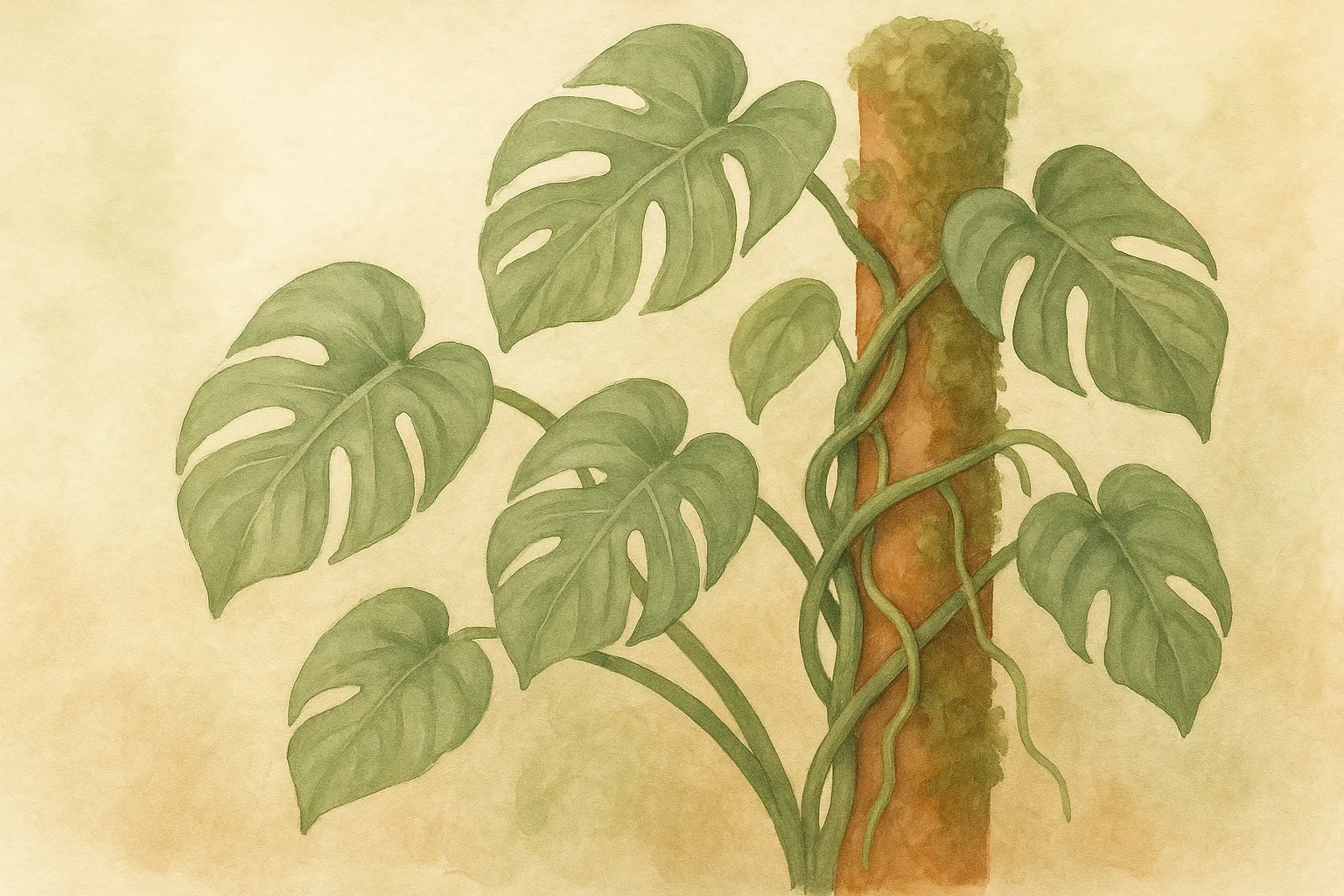
Because a Monstera is a natural climber, it grows larger, healthier leaves when it has something to climb. A moss pole is the classic choice. As the plant grows, gently tie new stems to the pole. The aerial roots will grip it over time, and you will often notice bigger, more fenestrated leaves as a result.
If you prefer a bushier shape, you can let it trail, but expect smaller leaves and a floppier habit.
Repotting
Monsteras like to be slightly snug in their pots, but every one to two years they will benefit from a larger home. Signs it is time to repot include roots growing out of the drainage holes and water running straight through without soaking in. Move up just one pot size, use a well-draining aroid mix, and repot in spring for the least stress.
Common problems and fixes
Yellow leaves
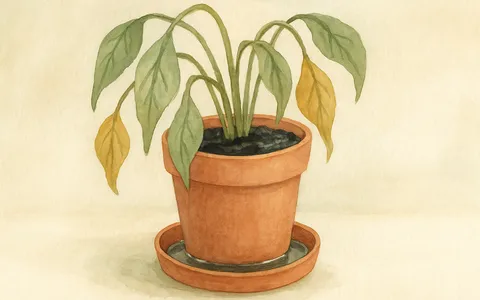
Yellowing leaves usually point to overwatering. Check that the soil is drying out between waterings and that the pot drains well. Occasional yellowing of an old lower leaf is normal aging and nothing to worry about.
Brown leaf edges
Crispy brown edges typically mean the air is too dry or the plant has been underwatered. Increase humidity and check your watering rhythm.
No holes in the leaves
A young Monstera produces solid leaves. Fenestrations develop as it matures and gets enough light. If a well-established plant still lacks holes, give it brighter light and a pole to climb.
Pests
Watch for spider mites and mealybugs, especially in dry indoor air. Wipe the leaves regularly, inspect the undersides, and treat any infestation early with insecticidal soap or neem oil.
The takeaway
Give your Monstera deliciosa bright indirect light, water it only when the top of the soil dries out, keep the air reasonably humid, and give it something to climb. Do those four things consistently and you will be rewarded with a lush, dramatic plant that keeps getting more impressive year after year.