What your Mi Flora sensor readings mean
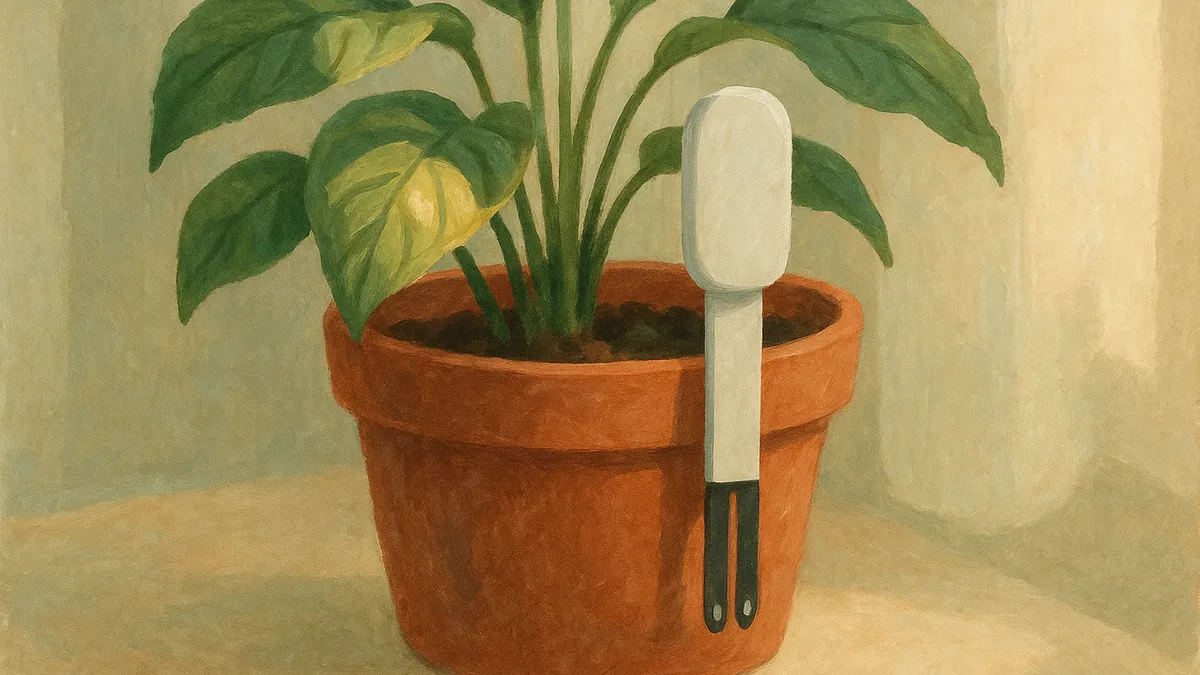
A Xiaomi Mi Flora or Flower Care sensor gives you four numbers: soil moisture, light, temperature, and soil fertility. On their own they are just figures. Once you know what each one measures, and what a healthy range looks like, they become the clearest picture of plant health you can get without digging up the roots. Here is how to read them.
Soil moisture
Moisture is shown as a percentage of how much water the soil is holding, from bone dry to fully saturated. It is the single most useful reading, because overwatering and underwatering cause most houseplant deaths.
There is no universal “good” number. A succulent or snake plant is happy dry, in the low tens of percent. A fern or calathea wants to stay steadily moist, often above forty percent. What matters is watching the curve: a healthy pot climbs when you water and dries down gradually between waterings. A reading that never drops usually means the pot drains poorly or you are watering too often.
Light
Light is measured in lux, the brightness falling on the sensor. Because indoor light changes through the day, a single spot reading tells you less than the pattern over a few days.
As a rough guide, a bright windowsill can hit tens of thousands of lux in direct sun, while a spot deep in a room may sit in the low hundreds. Low-light plants cope with far less. Flowering and variegated plants need more to stay vivid. If a plant is stretching, leaning hard toward the window, or losing its pattern, the light reading usually confirms the spot is too dim.
Temperature
Temperature is the air around the plant, in degrees. Most houseplants are comfortable in the same range people are, roughly 18 to 24 °C, and dislike sudden swings.
The reading is most valuable at the extremes: a cold windowsill in winter, a hot spot above a radiator, or a draught from an air conditioner. Cold snaps show up as stalled growth and dropped leaves. Heat spikes show up as fast drying soil and crisping edges. The sensor catches both before you would notice them by eye.
Soil fertility
Fertility, sometimes labelled conductivity or EC, estimates how many nutrients are dissolved in the soil by measuring how well it conducts electricity. Fresh potting mix and recent feeding read higher. Old, exhausted soil reads low.
A steady decline over weeks is normal as the plant feeds and you water nutrients through. A very low reading is a nudge to feed or repot. A very high reading can mean over-fertilising or salt build-up, which is worth flushing with plain water. Treat fertility as a trend, not a precise lab value.
Battery
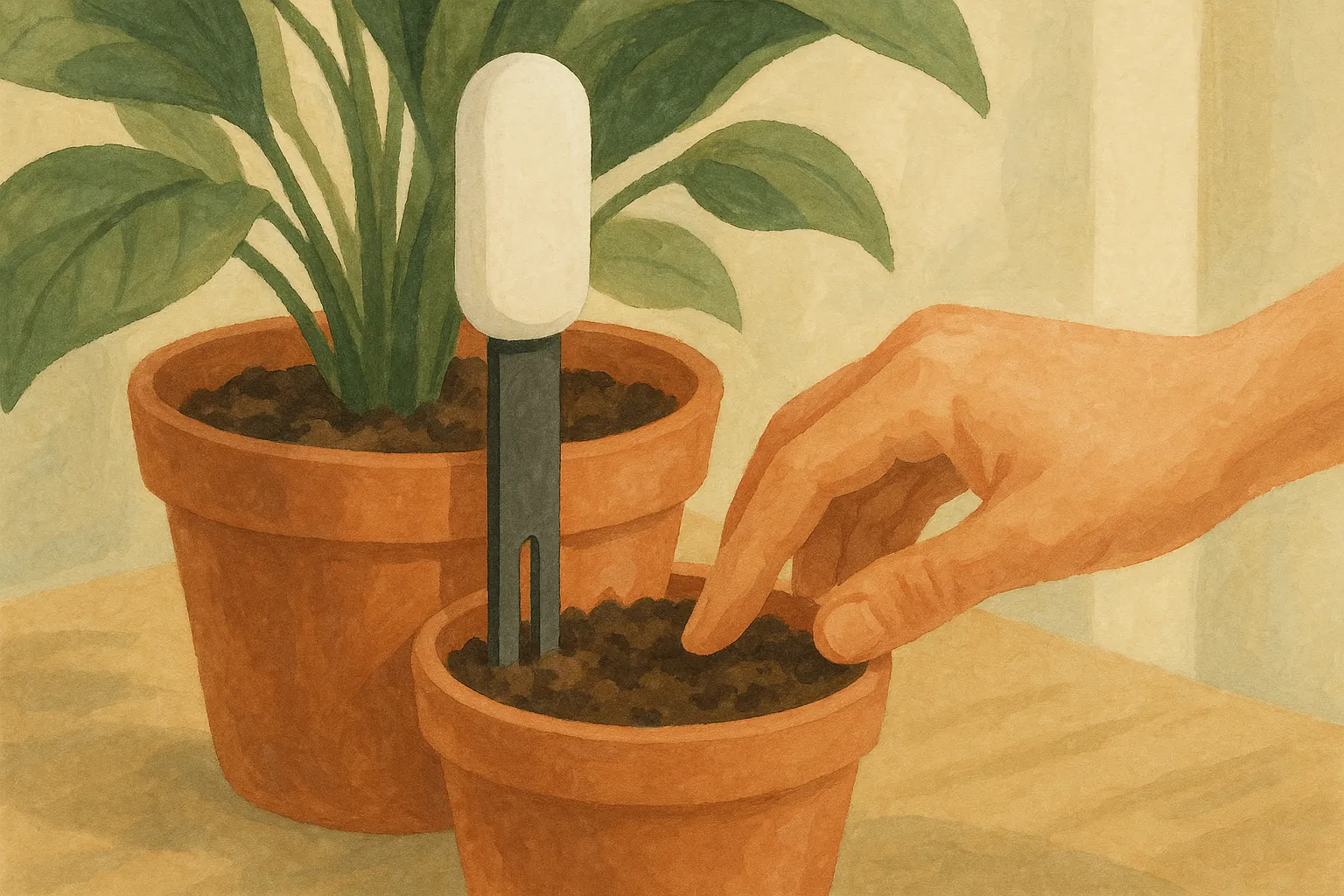
The sensor also reports its own battery. A single CR2032 cell runs for many months, but readings drift as it fades. When Urban Jungle Care flags a low battery, swap it promptly so your data stays trustworthy.
From numbers to care
This is where Urban Jungle Care earns its place. Instead of leaving you to interpret four figures per plant, it compares each reading against what your specific plant needs and turns the result into a task: water today, hold off, move to brighter light, feed this month, change a battery. The sensor tells you the state. The app tells you the action.
Learn to glance at the four readings and you will understand your plants faster. Let the app keep track of them for you, and you will rarely be caught out.