Soil moisture percentages: the ranges houseplants need

A soil moisture sensor gives you a single number, a percentage from bone dry to fully saturated. It looks simple, but the same reading can mean two very different things depending on what is growing in the pot. Thirty percent is comfortably moist for a succulent and worryingly dry for a fern. This guide walks through the ranges different houseplants actually need and how to read the number so it tells you something useful.
Why there is no single healthy number
Soil moisture percentage measures how much water the soil is holding relative to how much it can hold when saturated. Plants that evolved in dry, free-draining ground, like cacti and succulents, are built to cope with long dry spells and rot quickly if the soil stays wet. Plants that evolved in a rainforest understory, like ferns and calatheas, expect the soil around their roots to stay damp most of the time. Neither number is “correct” in isolation. The reading only becomes useful once you know what range suits the specific plant in the pot.
Rough ranges by plant type
These are starting points, not strict rules, since pot size and soil mix shift the numbers a little.
- Cacti and succulents: 5 to 15 percent, dry between waterings, spend long stretches at the low end.
- Snake plant, ZZ plant, sansevieria: 10 to 20 percent, comfortable dry, watered sparingly.
- Pothos, philodendron, monstera: 20 to 40 percent, watered again once the reading drops toward the low end.
- Ferns, calatheas, peace lilies: 40 to 60 percent, kept steadily moist and rarely allowed to dry out fully.
- Orchids in bark mix: readings behave differently again, since bark holds far less water than potting soil, so treat the percentage as a rough trend rather than comparing it to soil-grown plants.
Read the curve, not just the number
A single reading is a snapshot. What actually tells you how a plant is doing is the shape of the curve over days and weeks.
A healthy curve
Water the plant and the percentage jumps up sharply. Over the following days it drifts down in a smooth, gradual slope as the roots and the air dry the soil out. Water again once it nears the plant’s low end, and the cycle repeats. That rise-and-fall pattern is what a well-matched watering routine looks like on a graph.
Warning shapes
A reading that barely moves after watering usually means water is running past the root ball instead of soaking in, often a sign of compacted or root-bound soil. A reading that stays high for days without the usual gradual dry-down can mean the pot is not draining and the roots are sitting in water.
How to use the number in practice
- Learn your plant’s rough range from the list above, or from its specific care profile in the Urban Jungle Care app.
- Water when the reading approaches the low end of that range, not on a fixed calendar day.
- Confirm the reading actually climbs after watering. If it barely moves, check that water is reaching the roots rather than running down the inside of the pot.
- Watch how fast the reading falls afterwards. A much faster dry-down in summer than in winter is normal and just means the plant is using more water.
- Compare readings between same-type plants rather than across different species, since a fern and a succulent will never share a comfortable range.
Do not chase a single perfect percentage. Watch the trend over a week instead of reacting to one reading, since a healthy plant’s moisture level is always supposed to move up and down between waterings.
What can skew the reading
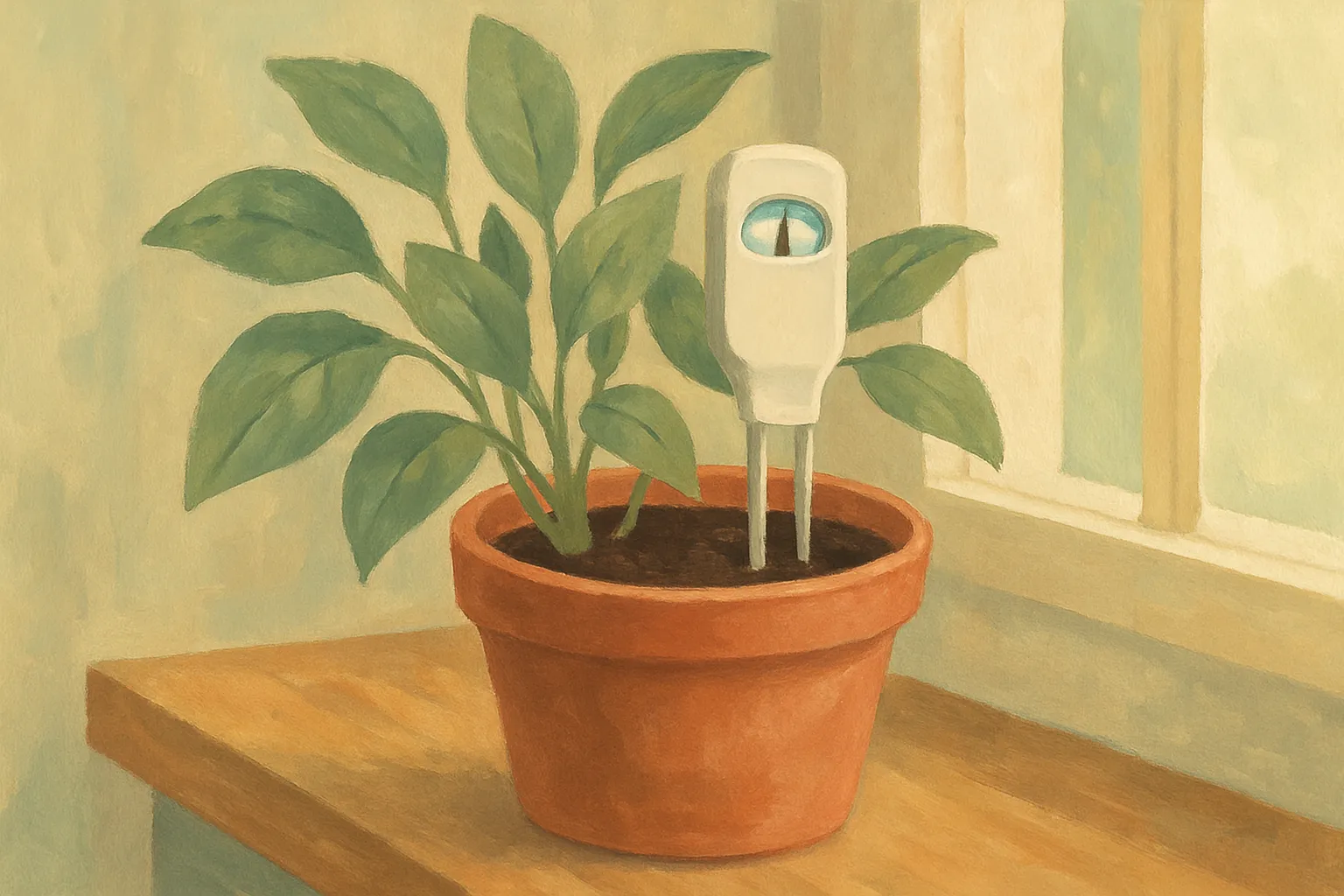
A sensor pushed too close to the stem or the pot’s edge can read differently from the bulk of the root ball, since moisture is rarely even through a pot. A reading taken minutes after watering will look high everywhere, so give it time to settle before judging. Heavy fertiliser salts can also nudge the number, since these sensors estimate moisture partly from how well the soil conducts electricity.
From percentage to action
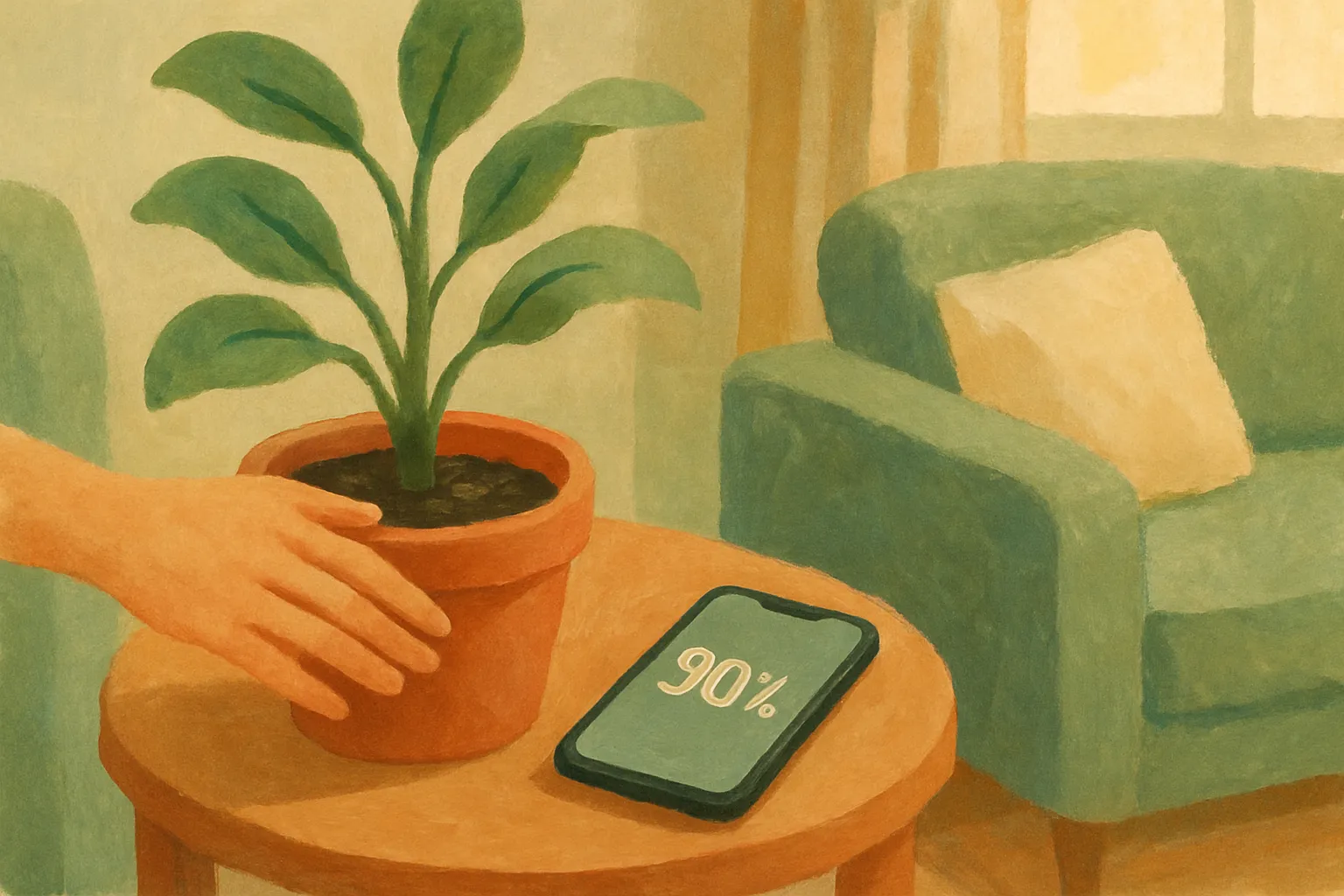
This is exactly where Urban Jungle Care is useful. Rather than asking you to memorise a range for every plant you own, it compares each sensor’s reading against the profile for that specific plant and turns the number into a plain instruction: water now, hold off, or check why the reading is not moving.
The takeaway
A soil moisture percentage only means something once you know the plant behind it. Learn the rough range your plant likes, watch how the number rises and falls between waterings rather than fixating on a single figure, and let a mismatched curve tell you when something, drainage, placement, or the schedule itself, needs a closer look.