How to get rid of fungus gnats on houseplants
If you have noticed tiny black flies rising from your plant pots whenever you water or brush past them, you are almost certainly dealing with fungus gnats. They are one of the most common houseplant nuisances, and while they are annoying, the good news is they are very manageable once you understand what feeds them.
What are fungus gnats?
Fungus gnats are small, dark, mosquito-like flies, only a few millimeters long, that live in and around the top layer of houseplant soil. The adults you see flying around are mostly harmless: they do not bite and they do not damage healthy leaves. The real trouble is underground.
The adults lay their eggs in moist soil, and the larvae, tiny translucent worms with black heads, feed on fungi, decaying organic matter, and in heavy infestations the fine roots of your plants. That root feeding can weaken young or already stressed plants, which is why it is worth dealing with them properly rather than just swatting the adults.
Why they appear
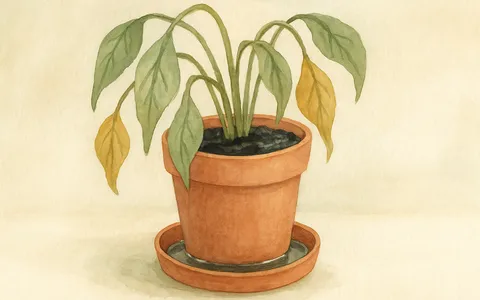
Fungus gnats thrive in one condition above all others: consistently moist soil. The damp top layer is the perfect nursery for their eggs and larvae, and it grows the fungus and organic matter they eat.
That is why overwatering is nearly always the underlying cause. Soil that never dries out, pots without drainage, and rich, peaty mixes that hold a lot of moisture all create an ideal breeding ground. Warm indoor temperatures let them reproduce quickly, so a small problem can become a cloud of flies in a couple of weeks. Understanding this makes the solution obvious: dry them out and break their life cycle.
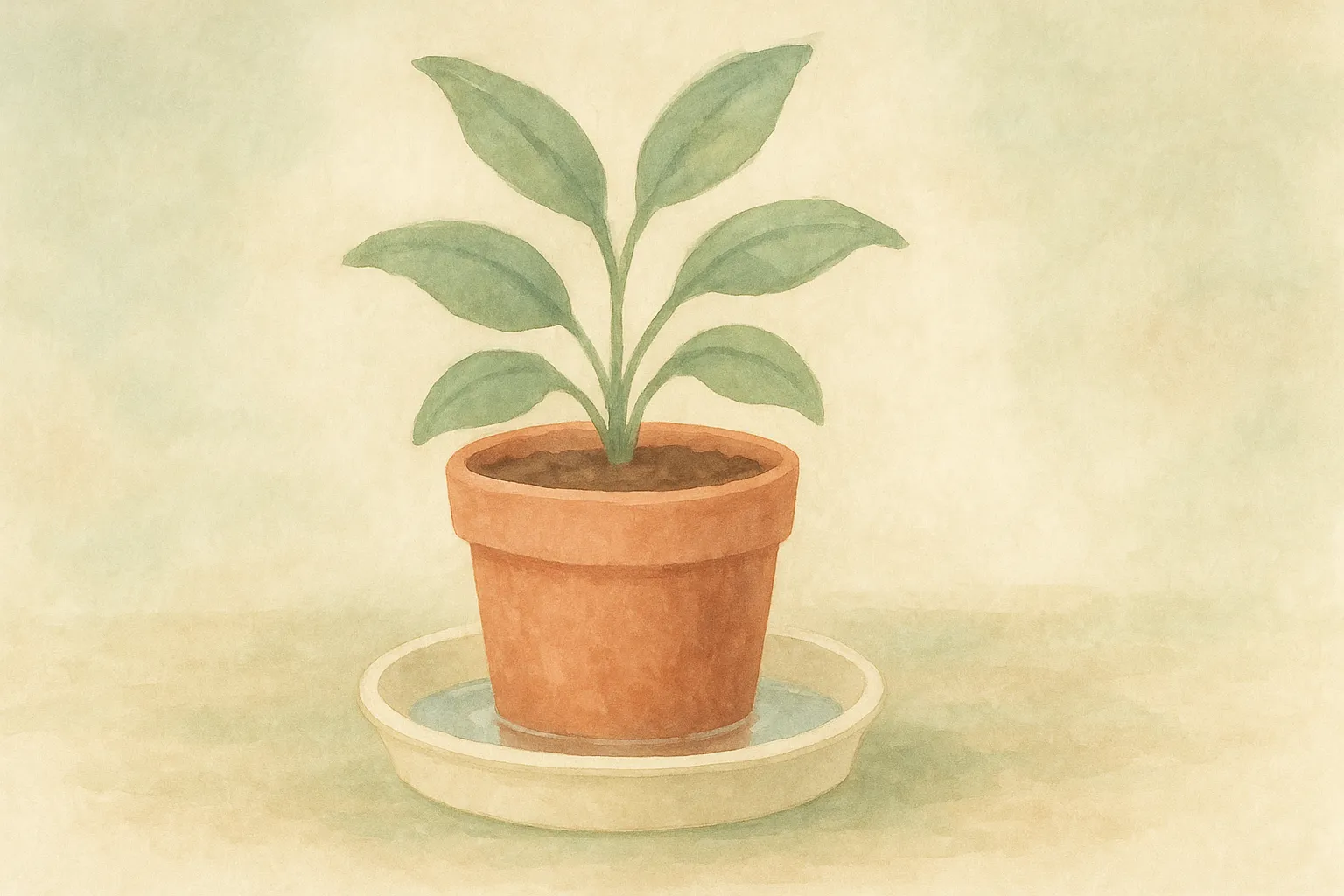
Water only from the bottom for a couple of weeks. Keeping the top layer bone dry means the eggs and larvae cannot survive there, which breaks the cycle fast.
A step-by-step removal plan
1. Let the soil dry out
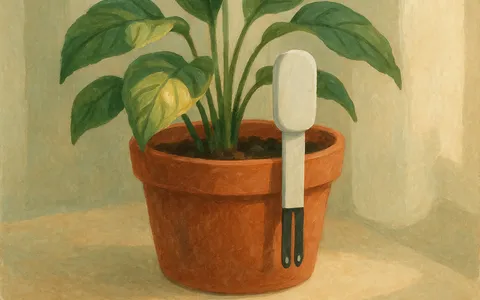
This is the most important step. Allow the top few centimeters of soil to dry completely between waterings. The larvae and eggs cannot survive in dry soil, so simply changing your watering habits starves them at the source. Most plants tolerate this well, and it also protects them from root rot.
2. Set out yellow sticky traps
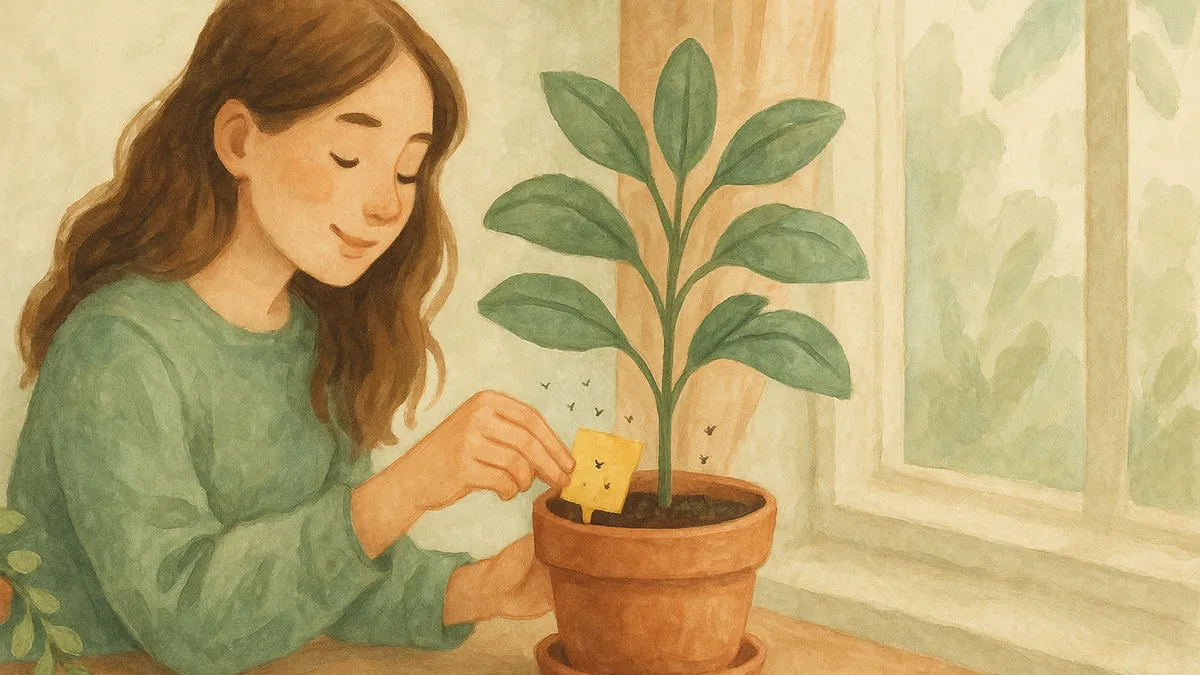
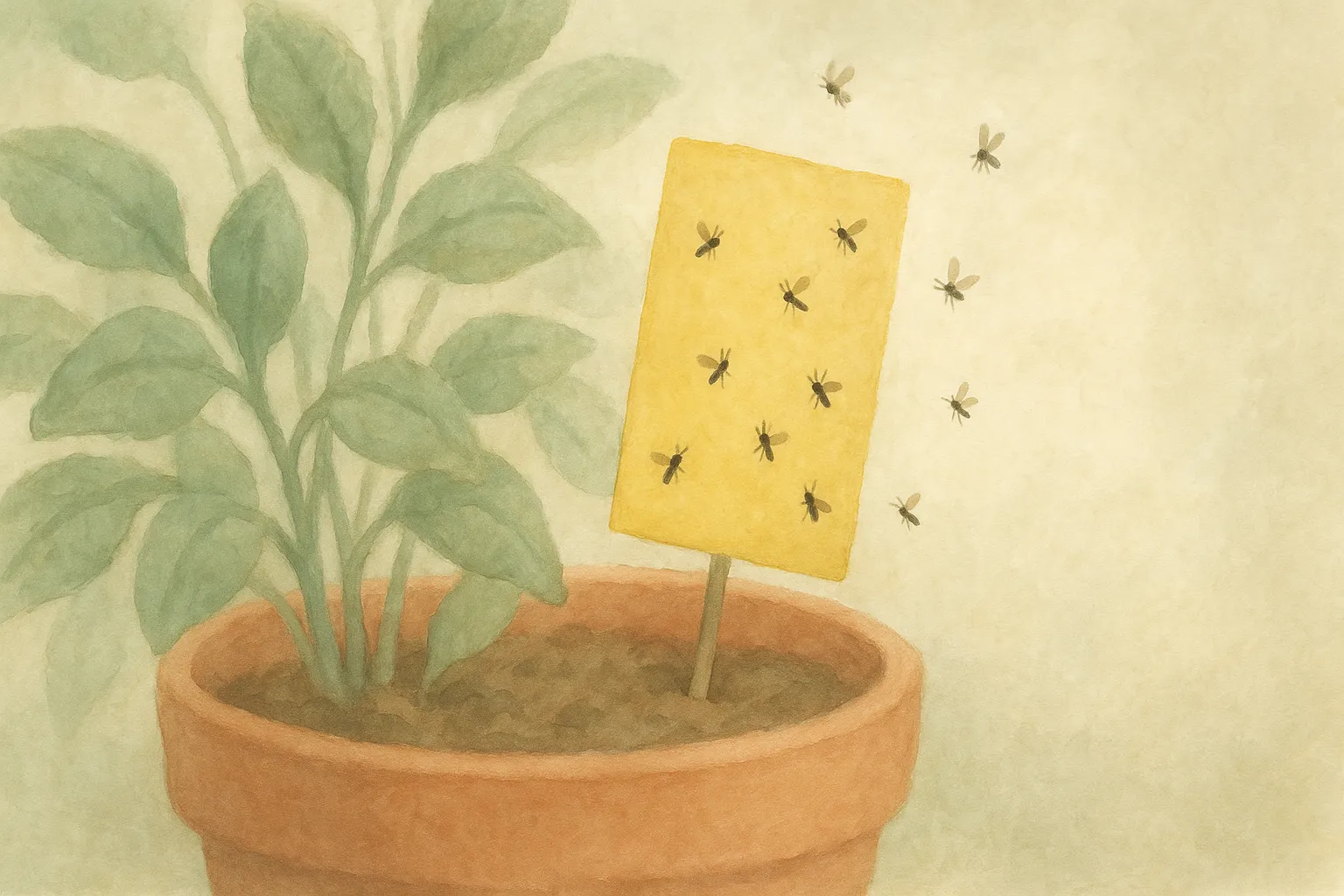
Place yellow sticky traps flat on or just above the soil surface. The adults are drawn to the yellow color and get stuck, which both reduces the flying population and stops them laying more eggs. Traps also let you track progress: fewer catches over time means you are winning.
3. Treat the larvae with BTI
To kill the larvae in the soil, use a product containing Bacillus thuringiensis israelensis, or BTI. It is sold as mosquito bits or mosquito dunks and is a naturally occurring bacterium that is harmless to plants, pets, and people but lethal to gnat larvae. Soak the granules in your watering can, then water your plants with the treated water. Repeat with each watering for a few weeks to catch newly hatched larvae.
4. Switch to bottom watering
Watering from below keeps the top layer of soil dry while still hydrating the roots. Sit the pot in a tray of water for twenty to thirty minutes, let it soak up moisture through the drainage holes, then remove it and let it drain. A dry surface gives the gnats nowhere to breed.
5. Cap the soil with a dry top layer
Cover the soil surface with a couple of centimeters of coarse sand, fine gravel, or small decorative stones. This dry barrier stops the adults from reaching the moist soil to lay eggs, and it dries out fast between waterings. It is one of the most effective long-term deterrents.
How to keep them from coming back
- Water only when needed. Let the soil dry appropriately between waterings and never leave pots sitting in standing water.
- Ensure good drainage. Every pot should have drainage holes, and saucers should be emptied after watering.
- Inspect new plants. Fungus gnats often arrive on newly bought plants. Quarantine new arrivals for a couple of weeks and check the soil before placing them among your others.
- Remove debris. Clear fallen leaves and dead plant matter from the soil surface, since these feed the larvae.
- Refresh tired soil. Old, broken-down soil holds moisture and organic matter. Repotting badly affected plants into fresh, well-draining mix gives them a clean start.
The takeaway
Fungus gnats are a symptom of soil that stays too wet, so the lasting fix is to dry things out. Let the surface dry between waterings, catch the adults with sticky traps, kill the larvae with BTI, and cap the soil to block new egg-laying. Stick with it for a few weeks and the flies will disappear, and better watering habits will keep them from coming back.