Why are my plant's leaves turning yellow?
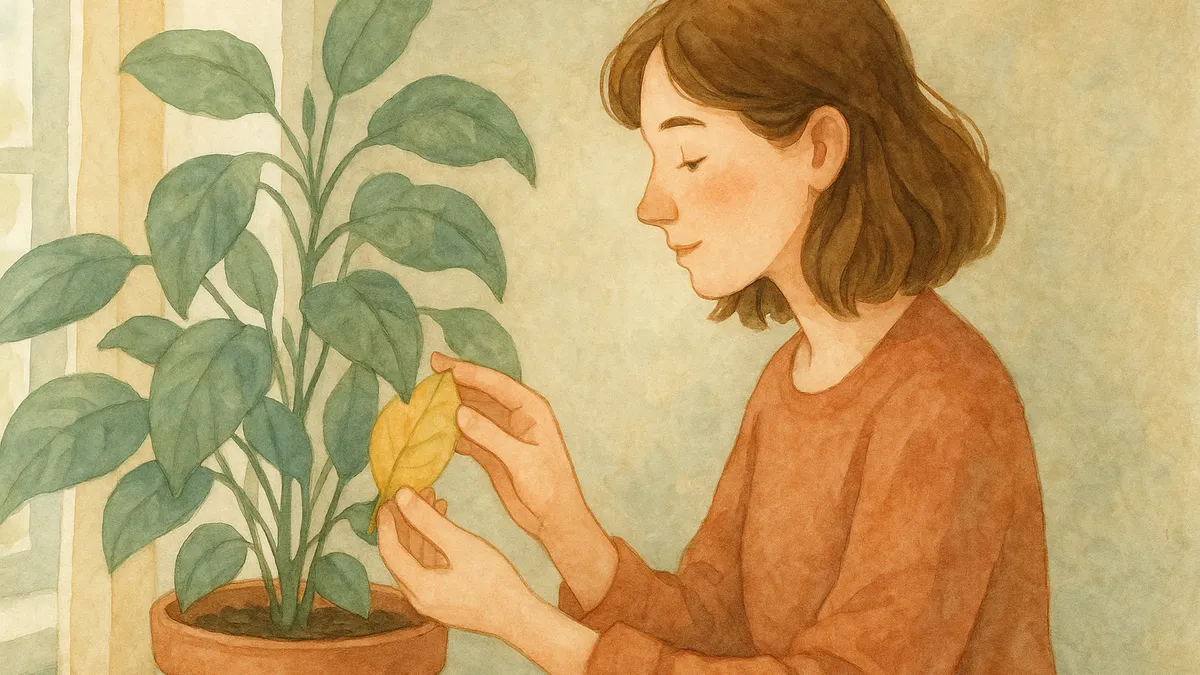
Yellow leaves are one of the most common worries for houseplant owners, and also one of the most confusing. The truth is that yellowing is a symptom, not a diagnosis. A leaf can turn yellow for half a dozen reasons, and the fix depends entirely on which one you are dealing with. This guide walks you through the usual suspects and how to tell them apart.
Start by looking at the pattern
Before you change anything, observe. Which leaves are yellowing, the old lower ones or the fresh new growth? Is the whole leaf pale, or just the tissue between the veins? Is the soil wet or bone dry? These clues narrow things down fast, so resist the urge to react before you have looked.
Check whether the yellow leaves are the oldest, lowest ones first. A single old leaf fading now and then is usually normal aging, not a problem to fix.
Overwatering: the most common cause
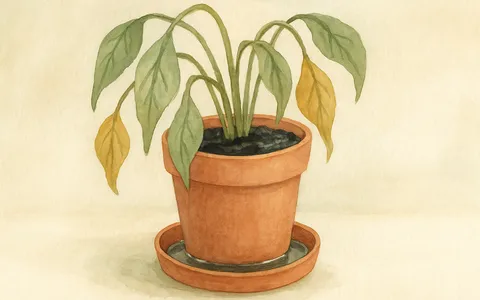
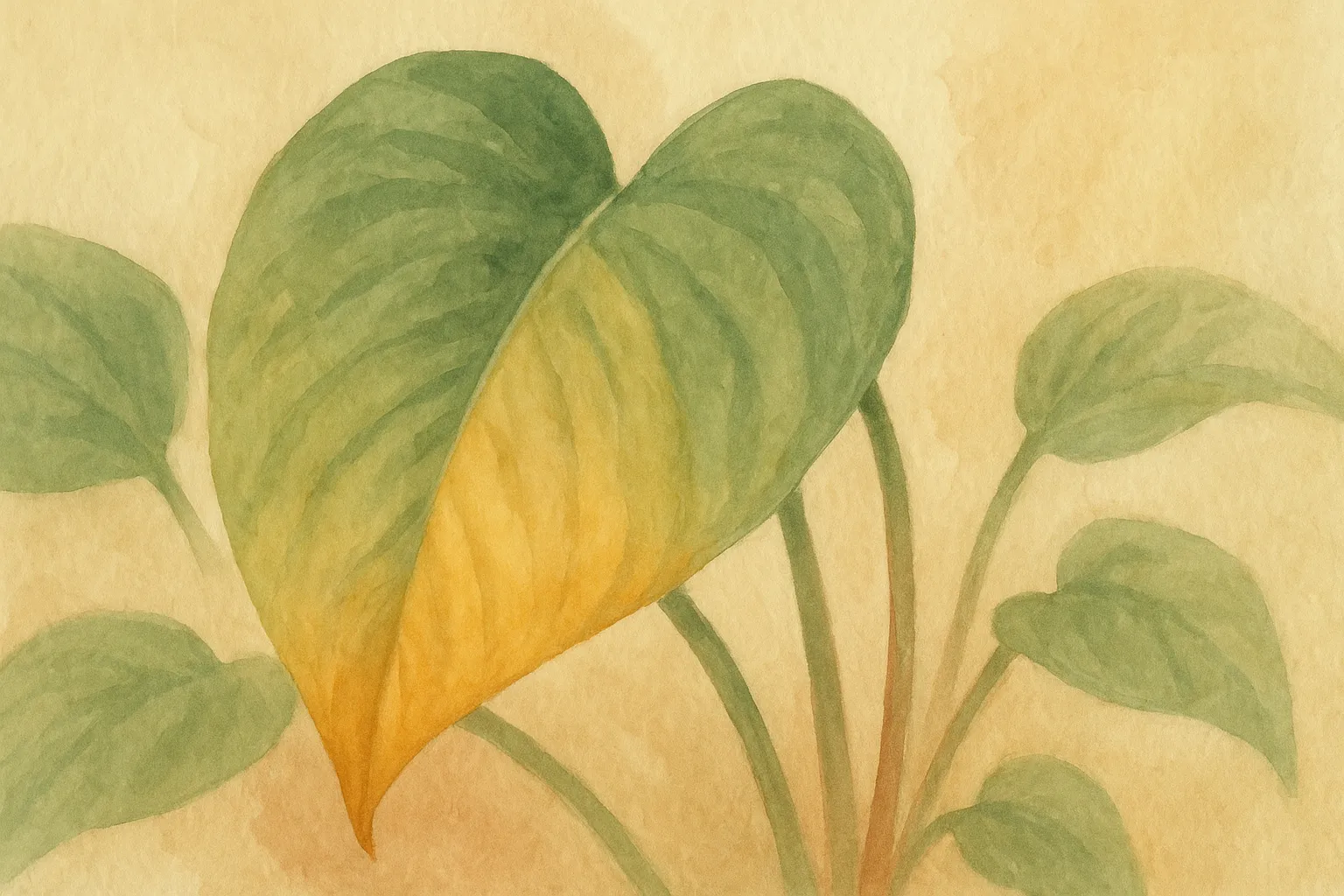
If the soil is constantly wet and the lower leaves are turning yellow and feeling soft or limp, overwatering is the most likely culprit. Roots need air as well as water, and when the soil never dries out they begin to suffocate and rot. This blocks the plant from taking up nutrients, which shows as yellow leaves.
To fix it, stop watering and let the soil dry out. Check that the pot has drainage holes and empty any saucer so the roots are never sitting in standing water. In severe cases, tip the plant out and inspect the roots. Healthy roots are firm and pale, while rotten ones are brown, mushy, and smell sour. Trim those away and repot in fresh, well-draining soil.
Underwatering: the opposite problem
Yellowing can also come from too little water. Here the leaves usually feel dry and crisp rather than soft, the soil pulls away from the sides of the pot, and the whole plant may look droopy. Give it a thorough soak, letting water run out of the bottom, and consider watering a little more often. If water runs straight through without soaking in, sit the pot in a basin of water for half an hour so the soil can rehydrate fully.
Light: too much or too little
Too little light often leads to overall paleness and slow, leggy growth, with lower leaves yellowing and dropping as the plant sheds what it cannot support. Move it somewhere brighter, but out of harsh direct sun.
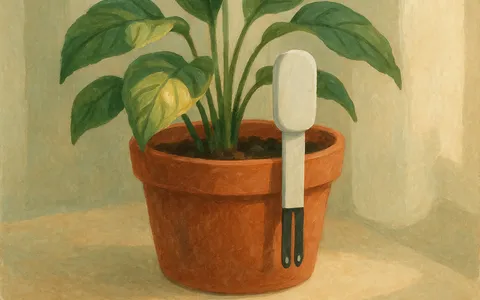
Too much direct sun does the opposite: it bleaches leaves to a washed-out yellow and can leave scorched brown patches. If the yellowing appears mainly on the side facing a bright window, filter the light with a sheer curtain or move the plant back.
Nutrient deficiency
If your plant has been in the same soil for a long time without feeding, it may simply be hungry. Nitrogen deficiency typically yellows the oldest leaves first while the plant stays otherwise healthy. An iron or magnesium deficiency often shows as yellowing between the veins while the veins themselves stay green.
During the growing season, feed with a balanced liquid houseplant fertilizer, diluted to half strength, roughly once a month. If the plant is badly potbound, fresh soil will also restore nutrients.
Natural aging
Not all yellow leaves are a problem. Plants routinely retire their oldest leaves, usually the lowest ones, to redirect energy into new growth. If a single old leaf yellows now and then while the rest of the plant looks great, that is completely normal. Just remove it once it has faded.
Pests
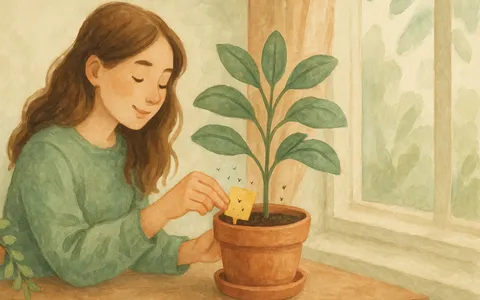
Sap-sucking pests such as spider mites, aphids, and thrips drain the plant and cause stippled, yellowing, or speckled leaves. Check the undersides of leaves and the leaf joints for tiny moving dots, fine webbing, or sticky residue. If you find pests, isolate the plant and treat it with insecticidal soap or neem oil, repeating every few days until they are gone.
A quick diagnostic checklist
- Soil wet and leaves soft: overwatering. Let it dry out.
- Soil dry and leaves crisp: underwatering. Soak thoroughly.
- Pale and leggy: too little light. Move it brighter.
- Bleached with brown patches: too much direct sun. Filter it.
- Yellowing between green veins: likely a nutrient issue. Feed or repot.
- One old lower leaf at a time: natural aging. Nothing to fix.
- Speckling, webbing, or sticky spots: pests. Treat promptly.
The takeaway
Yellow leaves are your plant’s way of telling you something has shifted. Look before you act, match the pattern to a cause, and change one thing at a time. Most yellowing traces back to watering habits, so if in doubt, check the soil first. Fix the root cause and the new growth that follows will come in healthy and green.