Signs of overwatering (and how to fix it)
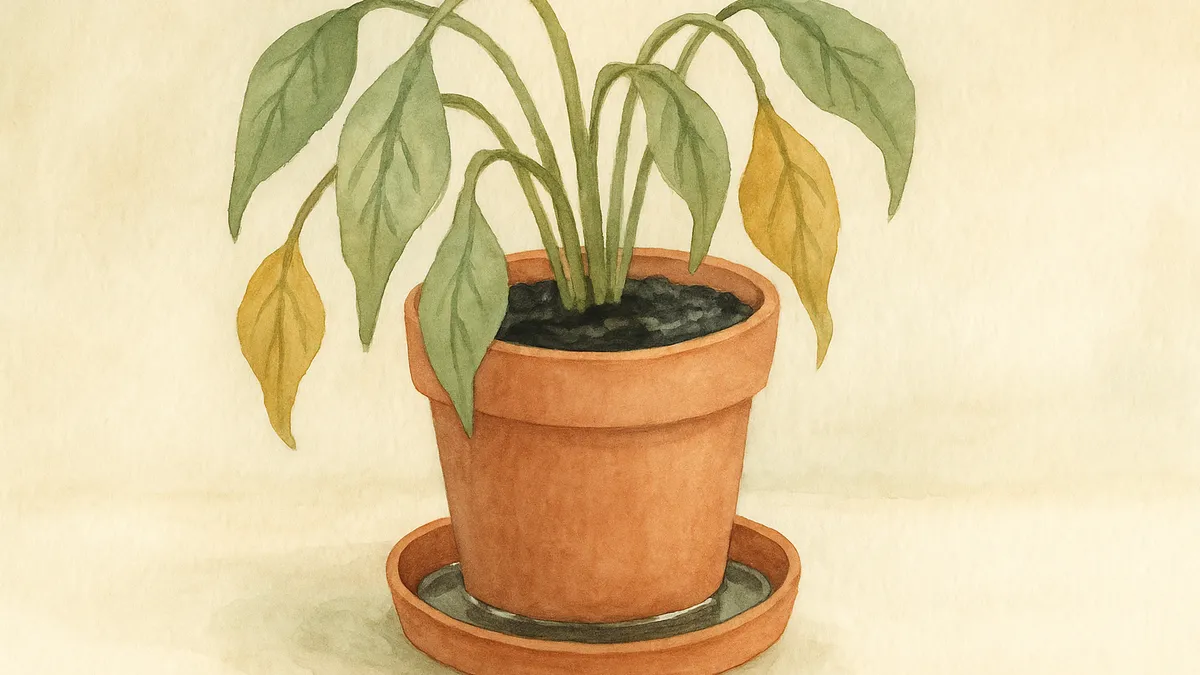
Overwatering is the single most common way people accidentally harm their houseplants. The tricky part is that an overwatered plant often looks like a thirsty one, so the instinct is to add even more water, which makes things worse. This guide helps you recognize the real signs, understand the root cause, and bring a struggling plant back to health.
Why overwatering is so harmful
Plant roots do not just need water. They also need oxygen. Healthy soil contains air pockets that let roots breathe. When soil stays soggy for too long, those air pockets fill with water and the roots effectively suffocate. Starved of oxygen, they begin to die and rot, and the harmful fungi that cause root rot move in.
The cruel irony is that damaged roots can no longer absorb water properly, so the plant wilts and looks dehydrated even though it is drowning.
The warning signs
Yellowing leaves
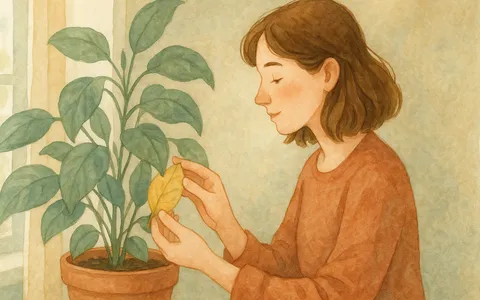
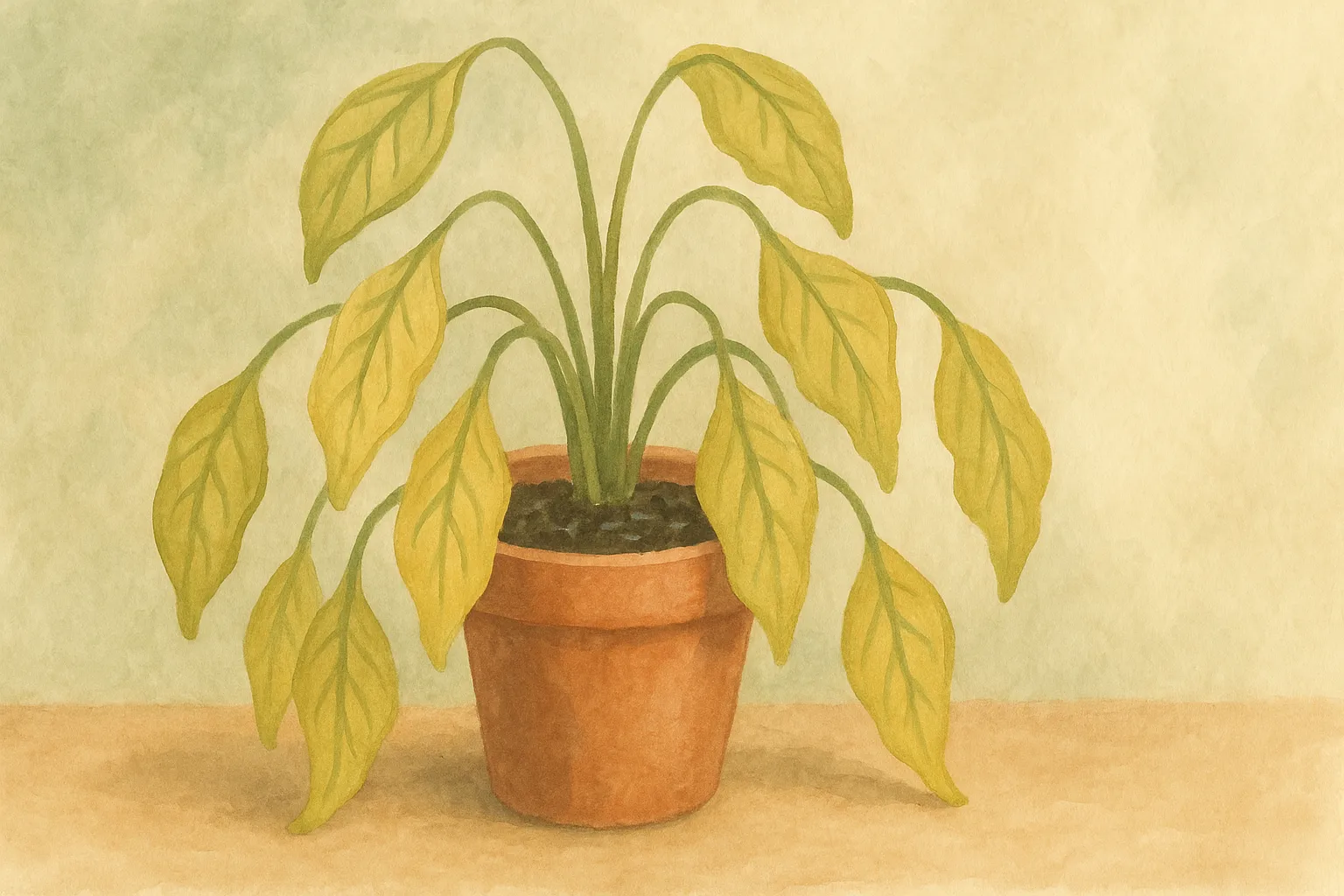
One of the earliest and most common signs is yellowing leaves, often starting with the lower, older foliage. Unlike the crisp, dry yellowing of an underwatered plant, overwatered leaves tend to feel soft and limp.
Wilting despite moist soil
If your plant is drooping but the soil is still damp, do not reach for the watering can. Wilting with wet soil is a classic overwatering symptom caused by failing roots that can no longer move water up to the leaves.
Mushy stems and a bad smell
Press gently near the base of the plant. If the stem feels soft or mushy, or if the soil gives off a sour, rotten smell, root rot has likely set in. This is a serious sign that needs immediate action.
Brown, soft leaf spots
Overwatered plants often develop brown patches with a soft, water-soaked texture, unlike the dry, crispy brown of underwatering.
Mold, fungus gnats, or a crust on the soil
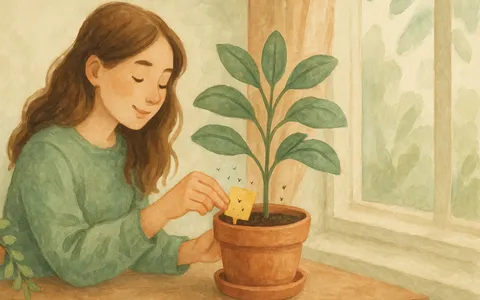
Persistently wet soil invites mold growth on the surface and attracts fungus gnats, whose larvae thrive in damp conditions. A white crust or fuzzy patches on the topsoil are further clues.
Always empty the saucer a few minutes after watering so the roots never sit in standing water, this single habit prevents most overwatering.
How to fix an overwatered plant
Step 1: Stop watering immediately
The first step is simply to stop. Move the plant out of direct sun to reduce stress while it recovers, and let the soil begin to dry.
Step 2: Check the roots
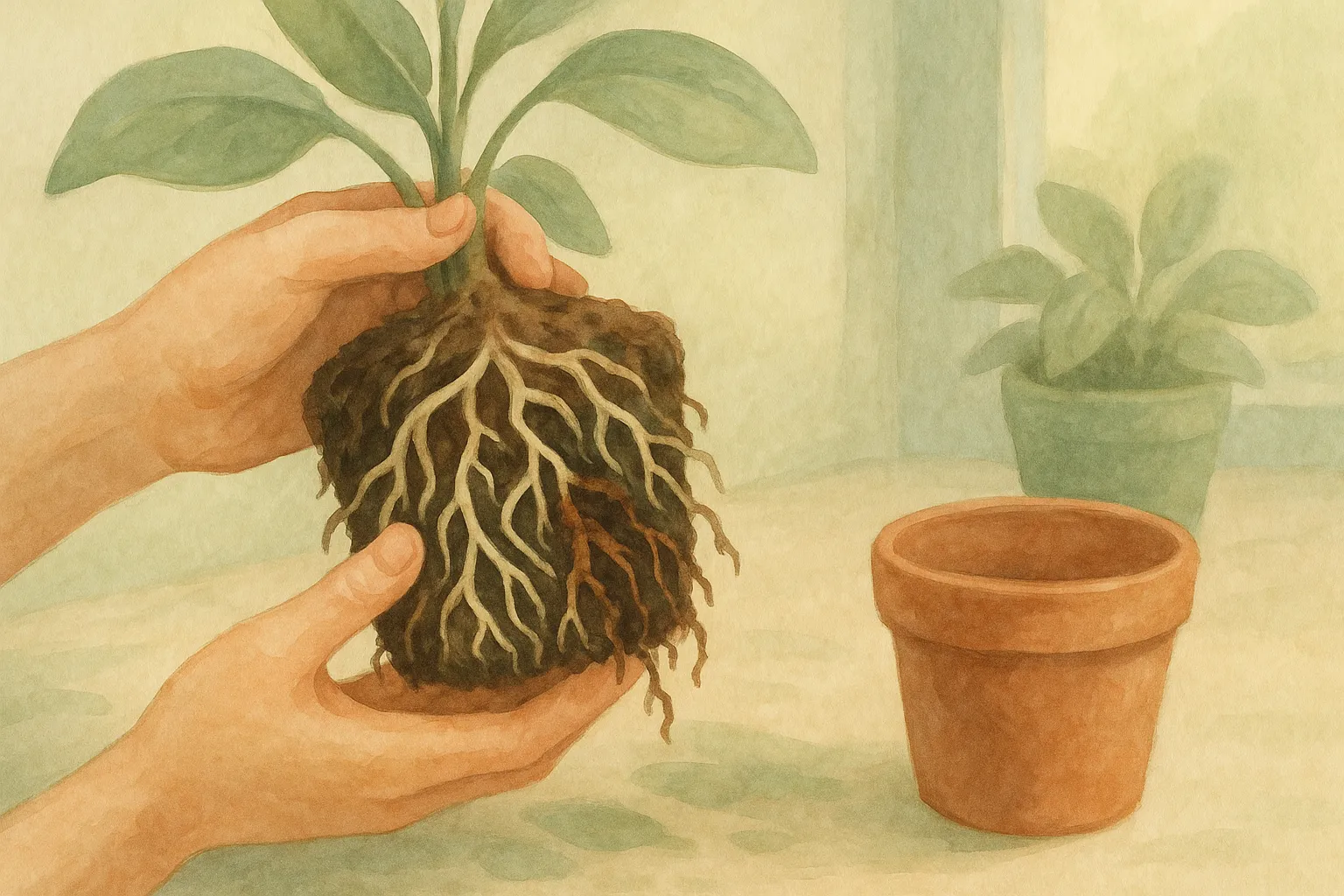
Gently remove the plant from its pot and inspect the roots. Healthy roots are firm and white or light tan. Rotten roots are brown or black, soft, and may fall apart or smell foul.
Step 3: Trim the rot
Using clean, sharp scissors, cut away all the mushy, discolored roots until only firm, healthy tissue remains. If a lot of root is lost, prune back some of the foliage too so the reduced root system is not overwhelmed.
Step 4: Repot in fresh, dry soil
Wash off the old, waterlogged soil and repot into fresh, well-draining mix. Choose a pot with drainage holes that is not much larger than the root ball, since oversized pots hold excess moisture. Terracotta pots help because they let soil breathe and dry out faster.
Step 5: Water carefully going forward
Wait until the top few centimeters of soil are dry before watering again. Water thoroughly, then let the pot drain completely and never leave it sitting in a saucer full of water.
Preventing it from happening again
- Always use pots with drainage holes.
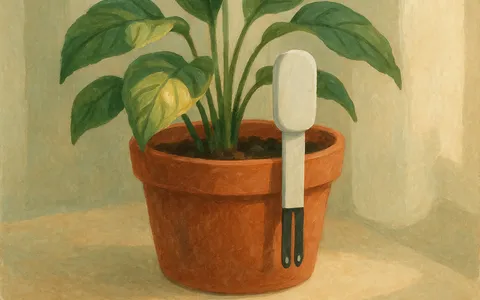
- Check the soil with your finger before every watering instead of following a fixed calendar.
- Use a well-draining potting mix suited to your plant type.
- Water less in winter, when growth slows and plants use far less water.
- Empty saucers and cache pots after watering.
The takeaway
Overwatering hides behind symptoms that mimic thirst, so the golden rule is to check the soil before you water. When in doubt, wait. A plant recovers from being a little too dry far more easily than from soggy, oxygen-starved roots. Catch the signs early, act decisively, and most overwatered plants can be saved.