How to care for a pothos
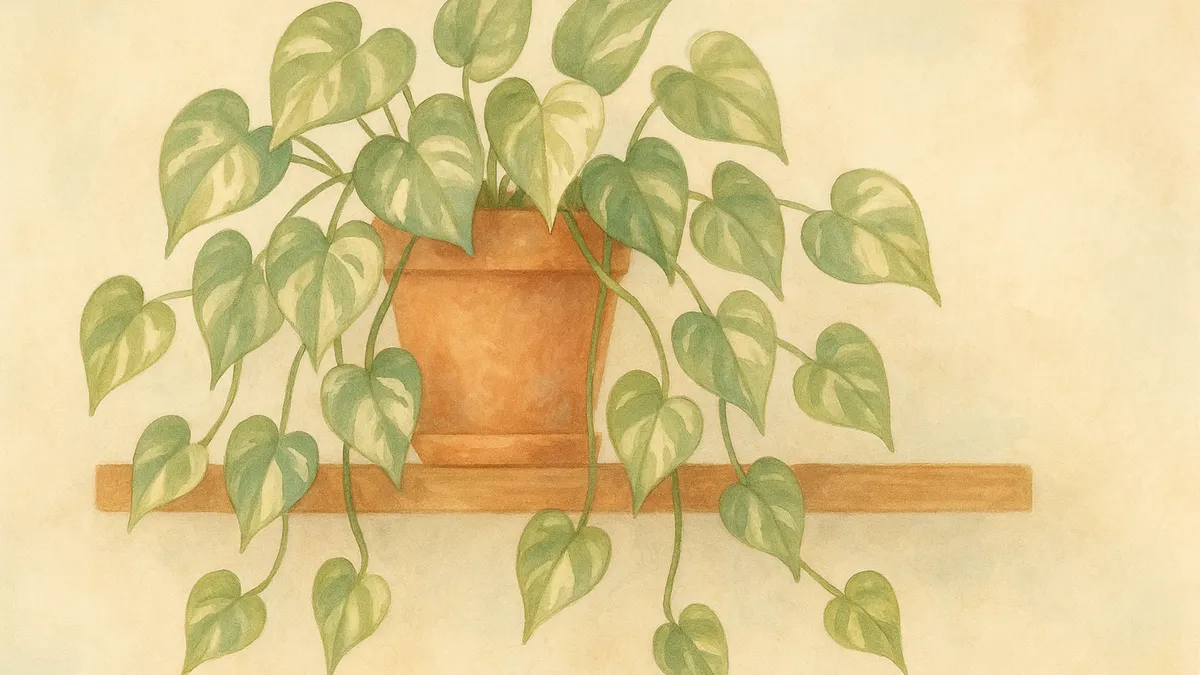
The pothos, also sold as Scindapsus or devil’s ivy, is one of the easiest and most rewarding houseplants around. Its heart-shaped leaves trail beautifully from a shelf or climb happily up a pole, and it forgives almost every beginner mistake. Whether you want a cascading curtain of green or a tidy climber, this guide covers everything you need.
Light: bright indirect is the sweet spot
Pothos are wonderfully adaptable. They grow fastest and keep their variegation brightest in bright, indirect light, a meter or so back from a window. Golden and marbled varieties especially need decent light to hold their patterns. In dim spots they tend to revert to plain green.
They will also tolerate low light better than most plants, which is why they turn up in offices and bathrooms. Just avoid harsh direct sun, which scorches the leaves, and expect slower growth in darker corners.
Watering: let it dry, then soak
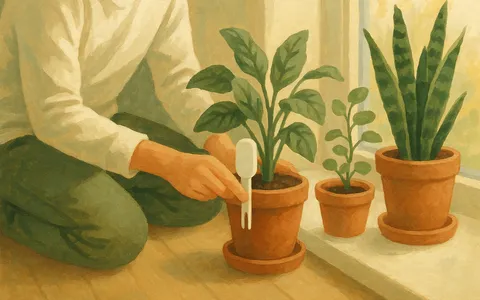
Pothos like to dry out a little between waterings. Wait until the top few centimeters of soil feel dry, then water thoroughly until it runs out of the drainage holes, and empty the saucer.
A drooping, limp pothos is usually thirsty and perks up quickly after a drink, which makes it a very readable plant. Overwatering is the bigger danger: constantly soggy soil leads to yellowing leaves and root rot. When unsure, wait a day and check the soil again.
In practice this means roughly weekly watering in summer and every ten to fourteen days in winter, but always go by the soil rather than the calendar.

Trailing or training
Part of the fun of a pothos is deciding how to grow it.
Trailing
Left to hang from a shelf or hanging pot, the vines can grow several meters long. To keep them full rather than straggly, pinch or trim the tips now and then, which encourages the plant to branch and stay bushy.
Climbing
In the wild, pothos climb, and given a moss pole or trellis they will do the same indoors, often producing noticeably larger leaves as they go. Guide the vines upward and secure them loosely until the aerial roots take hold.
You can also train vines along a wall using small hooks, turning a single plant into a living garland.
Propagation in water
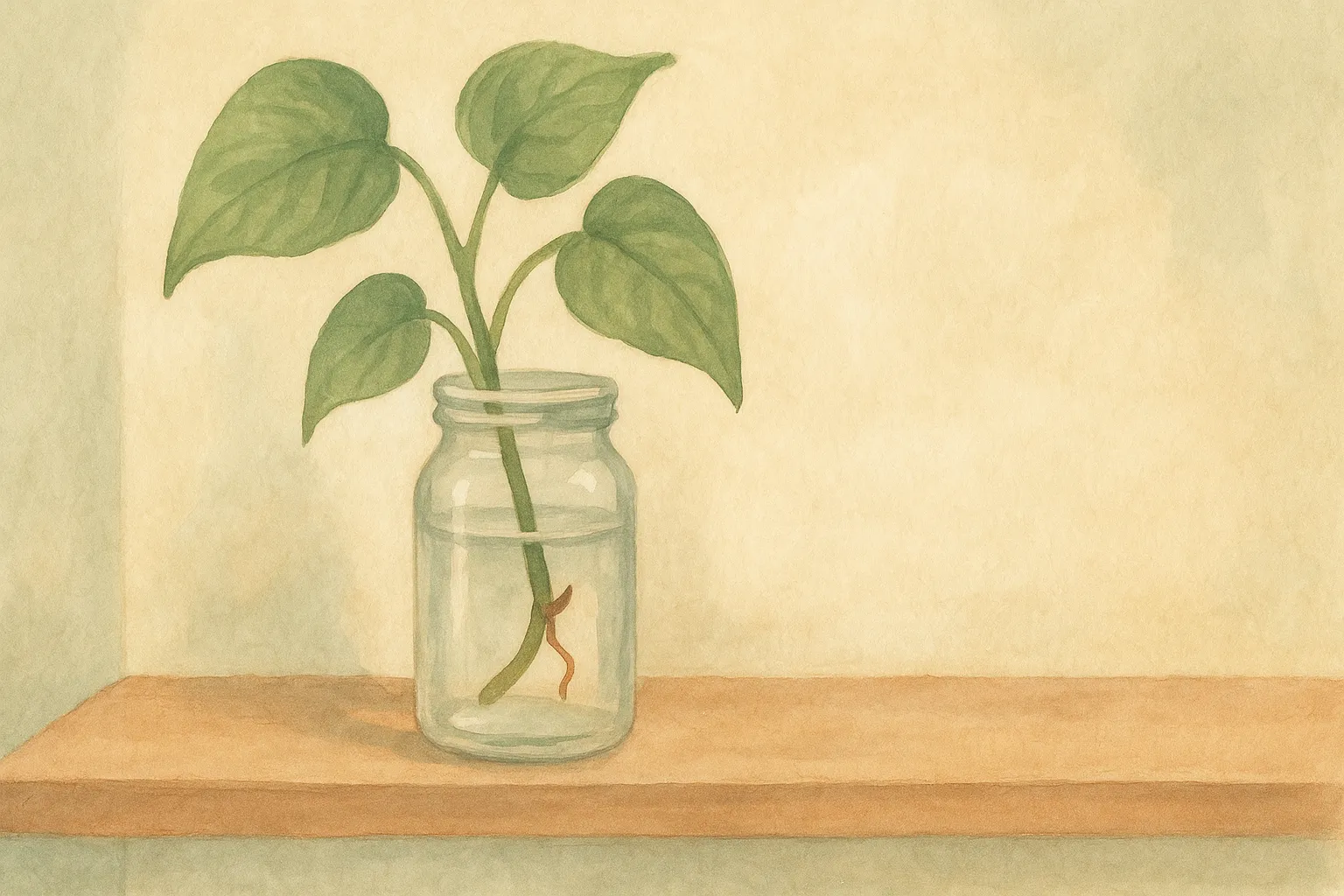
Few plants are as satisfying to propagate as pothos, and water is the easiest way.
- Find a healthy vine and cut a section just below a node, the little bump where a leaf meets the stem and where roots emerge. Each cutting should have at least one or two leaves.
- Remove the lowest leaf so the node sits bare.
- Place the cuttings in a glass of water with the node submerged and the leaves above the surface.
- Set the glass in bright, indirect light and change the water every few days to keep it fresh.
Roots usually appear within one to two weeks. Once they are a few centimeters long, pot the cutting into soil and keep it slightly moist while it settles in. You can also plant several cuttings together in one pot for an instantly full plant.
Pinch back the longest vines just above a leaf now and then. It pushes the plant to branch and stay full and bushy instead of growing long and leggy.
Feeding and repotting
During spring and summer, feed with a balanced liquid houseplant fertilizer at half strength about once a month, and pause in winter. Repot every year or two when roots start circling the pot or poking out of the drainage holes, moving up just one pot size into fresh, well-draining soil.
Common problems and fixes
Yellow leaves
Usually a sign of overwatering. Let the soil dry out more between waterings and make sure the pot drains freely.
Brown, crispy tips
Often caused by dry air or underwatering, and sometimes by too much direct sun. Check your watering rhythm and move the plant out of harsh light.
Loss of variegation
Fading to plain green means the plant wants more light. Move it somewhere brighter and prune back the plainest growth to encourage variegated shoots.
Leggy vines with sparse leaves
A sign of too little light. Move it brighter and trim the bare stems to promote fuller growth.
The takeaway
Give your pothos bright indirect light, water it once the top of the soil dries out, and prune it to keep it full. It will reward you with fast, forgiving growth, and thanks to how easily it roots in water, one plant can quickly become many. It is hard to think of a better first houseplant.